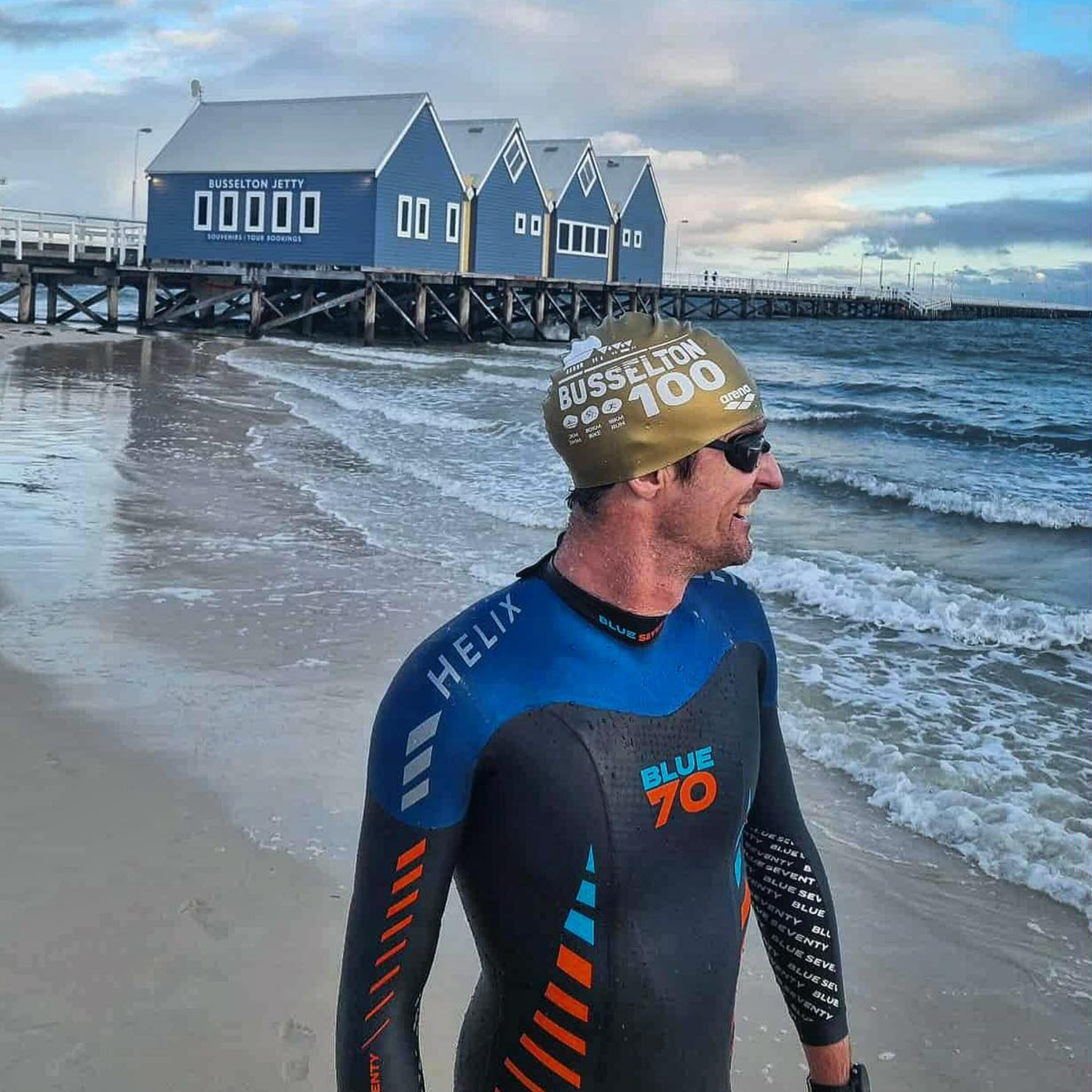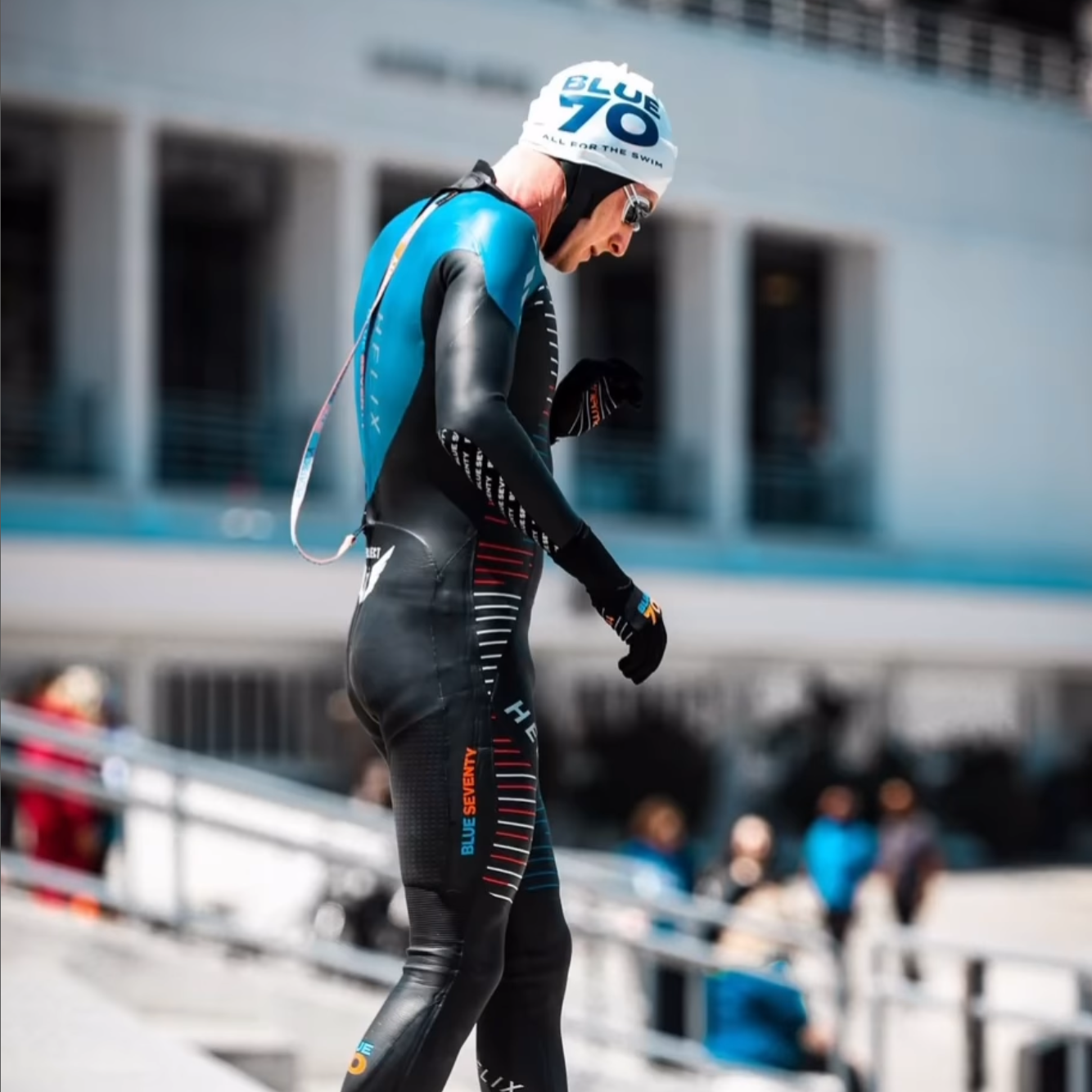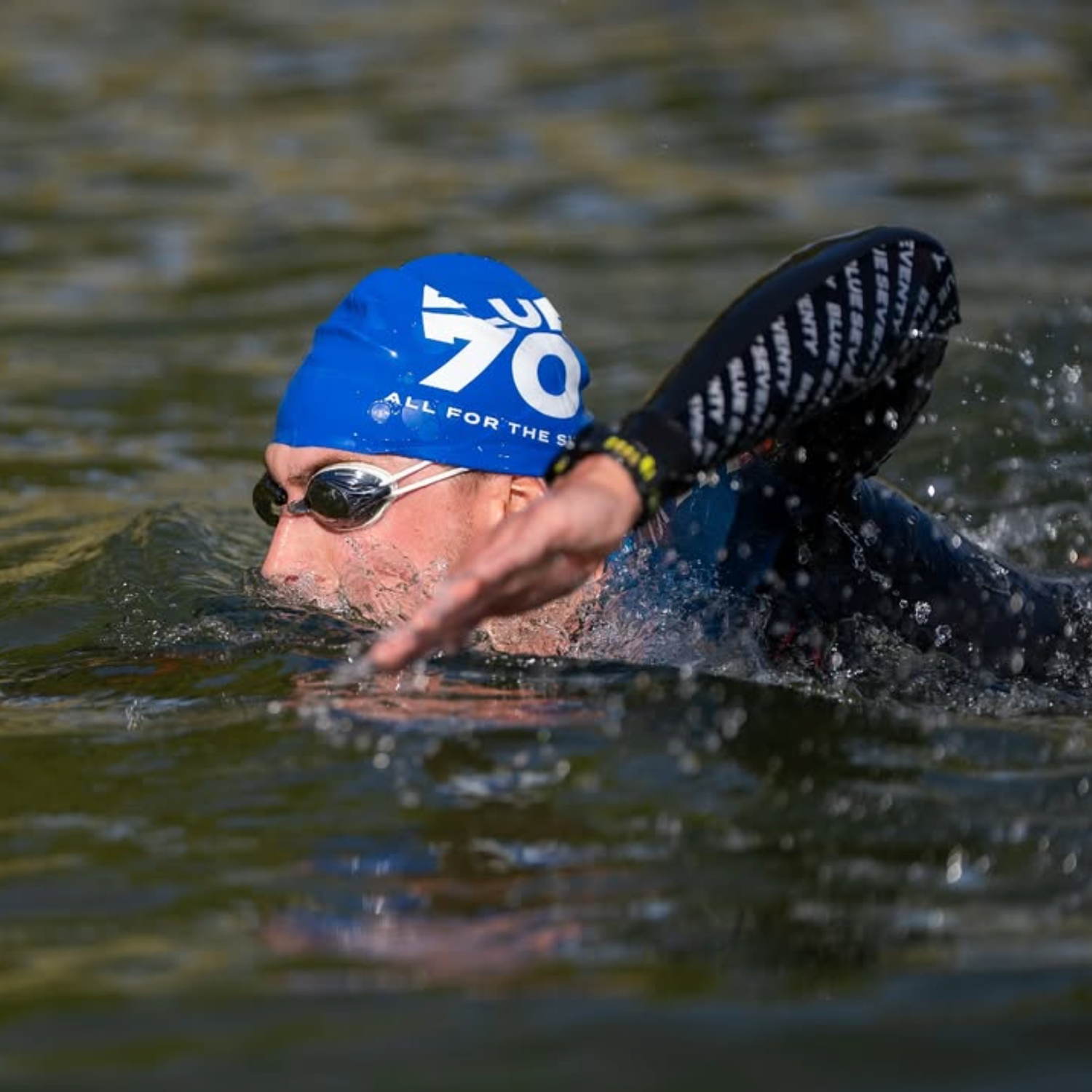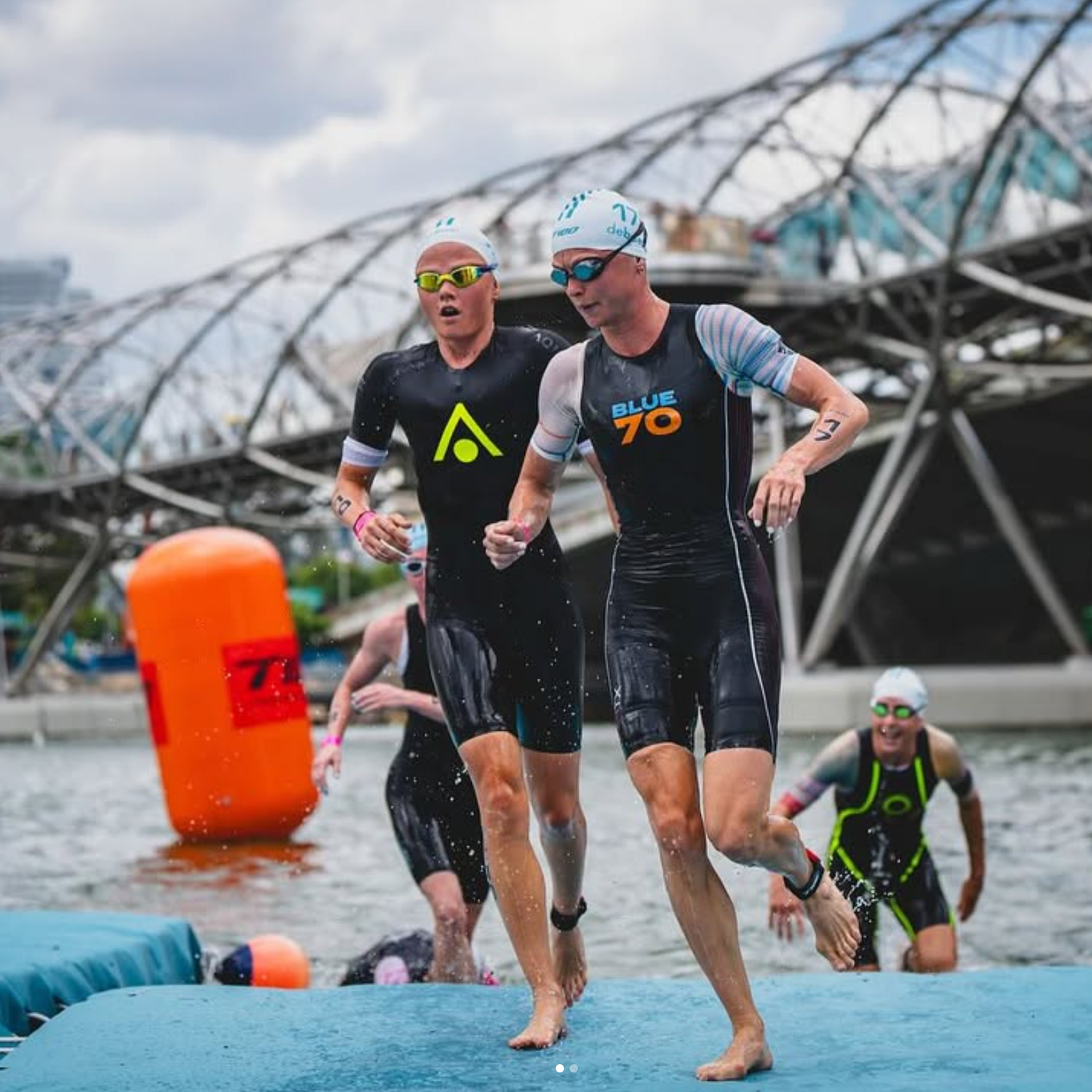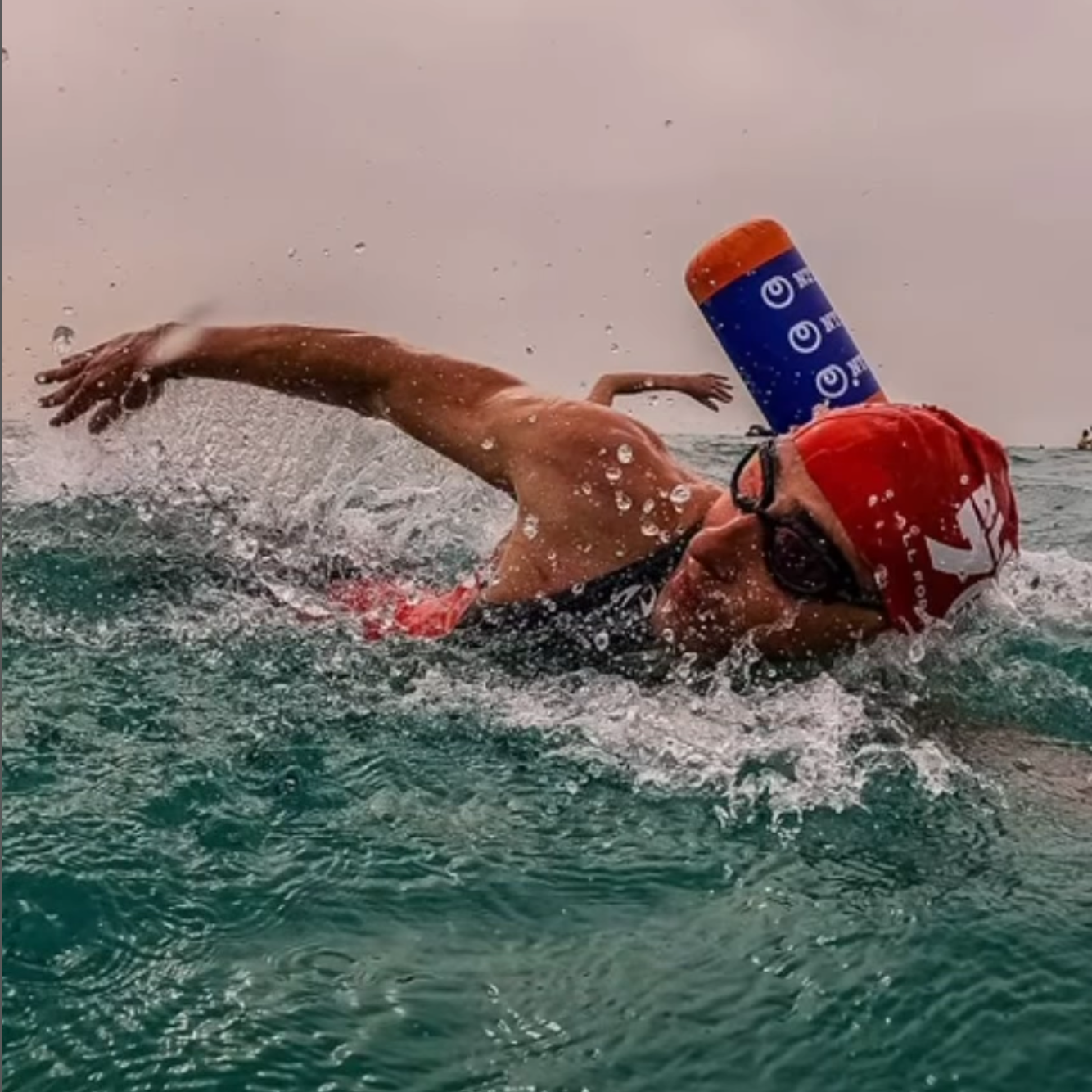



No Blueseventy swim or triathlon wetsuit has an integrated hood. That design choice is intentional. Integrated hoods are common in scuba and surf suits, where you spend long periods stationary in the water. A swim-specific wetsuit has different demands: you need to turn your head to breathe and sight, keep the neck seal quiet, and get the suit off fast in transition. Blueseventy keeps the hood separate so you can add or remove head coverage as conditions change.
Why Blueseventy keeps hoods separate
A hooded wetsuit links your head to the suit. Every time you turn to breathe, the hood tugs at the neckline. That breaks the seal, lets water in, and adds fatigue over a long swim. A separate neoprene hood moves with your head, so the suit stays where it should.
Blueseventy's design priorities point the same way. The Fusion got a lower-sitting neckline in its 2021 redesign specifically to reduce chafing without losing the watertight seal. The Helix and Reaction focus on shoulder and arm freedom. Adding a fixed hood to any of those suits would work against the range of motion they are built to deliver.
What to wear on your head in cold water
Use a separate neoprene hood or thermal cap. Pair it with the suit based on water temperature and your own cold tolerance.
Below roughly 56 to 58 degrees Fahrenheit, a purpose-built thermal suit adds meaningful warmth. That is where a neoprene hood earns its place. It covers the head and neck, the two areas where heat escapes fastest when you swim. Above roughly 70 to 72 degrees Fahrenheit, most swimmers do not need head coverage, and a full suit can feel too warm on longer swims.
- Look for a hood with a snug face seal and enough stretch to allow a natural head turn.
- Try it on with the wetsuit before you swim.
- The hood skirt should sit flat where the suit collar meets your neck so water does not flush through the gap.
Blueseventy carries thermal accessories for cold-water swimming, so check the current thermal range for hood and cap options.
Which Blueseventy wetsuit pairs best with a separate hood
For cold water, start with the Thermal Reaction. It is fully lined with Zirconium jersey, a synthetic wool lining designed to provide added thermal protection for cold-water swimming. Add a separate neoprene hood over it for head coverage.
If you train frequently and want more durability than a delicate race suit, the Reaction is the next option. It uses higher-grade neoprene than the Fusion and is recommended for longer, more frequent swims. The Fusion works for shorter frequent swims, and its lower neckline can sit more comfortably under a hood skirt. The Sprint is the entry-level option if budget is the main concern.
All Blueseventy wetsuits use Yamamoto neoprene in 38, 39, and 40 cell grades. Higher cell numbers mean more flexibility. That matters when you are turning your head inside a separate hood, because the suit has to move with you.
If you race in cold water, the Helix is the race-day suit. Its thin, flexible neoprene in the arms and shoulders is designed for total race-day performance. Just know that the brand itself notes the Helix is not ideal for heavy training use because that thin neoprene will break down more quickly.
How to stay safe when adding head coverage
A hood adds thermal protection. It does not change the rules of cold-water swimming.
- Acclimatize gradually across multiple swims.
- Swim with a buddy who can see you.
- Enter slowly and keep early swims short.
- If you feel confused, lose coordination, or cannot get warm after you exit, get medical help.
The hood and thermal suit are designed to reduce heat loss, but cold water still demands respect.
Are there Blueseventy swimming wetsuits with integrated hoods?
No. The practical route for swimmers and triathletes is a separate neoprene hood. That gives you more sizing control and lets you leave the hood off in warmer water. It also keeps the suit as mobile as it was designed to be.
If you are building a cold-water kit, start with the Thermal Reaction and take it for a Test Swim. Blueseventy lets you swim in a suit and still return or exchange it within 30 days if it is clean, dry, and unmodified.