


Short answer: no Blue70 wetsuit in the current line carries an eco-friendly or recycled-material claim. That does not make the question off-limits. It means you should treat any green label as a set of specific questions, rather than a simple yes.
A wetsuit has several parts: the outer and inner jersey fabrics, the neoprene foam, the adhesive, the zipper, and the thread. A suit can use a recycled nylon outer face and still use petroleum-based neoprene. A suit with limestone-based neoprene may still use a conventional polyester lining. If a wetsuit is described as eco-friendly, ask which parts earned that word and which standard verified it.
Where Blue70 stands
Blue70 does not currently market a wetsuit as eco-friendly. The materials in the line are specified for swim-specific performance. Blue70 wetsuits use Yamamoto 38, 39, and 40-cell neoprene. Those numbers describe cell structure and flexibility. They do not tell you whether the neoprene is petroleum-based or limestone-based, and Blue70 does not publish a recycled-content percentage for its wetsuit fabrics.
This candor matters. A suit that lasts several seasons and gets repaired twice has a different footprint from a suit that delaminates after one season and goes to a landfill. Blue70's lower-impact path is durability, fit, and repair rather than a green label.
The durability case
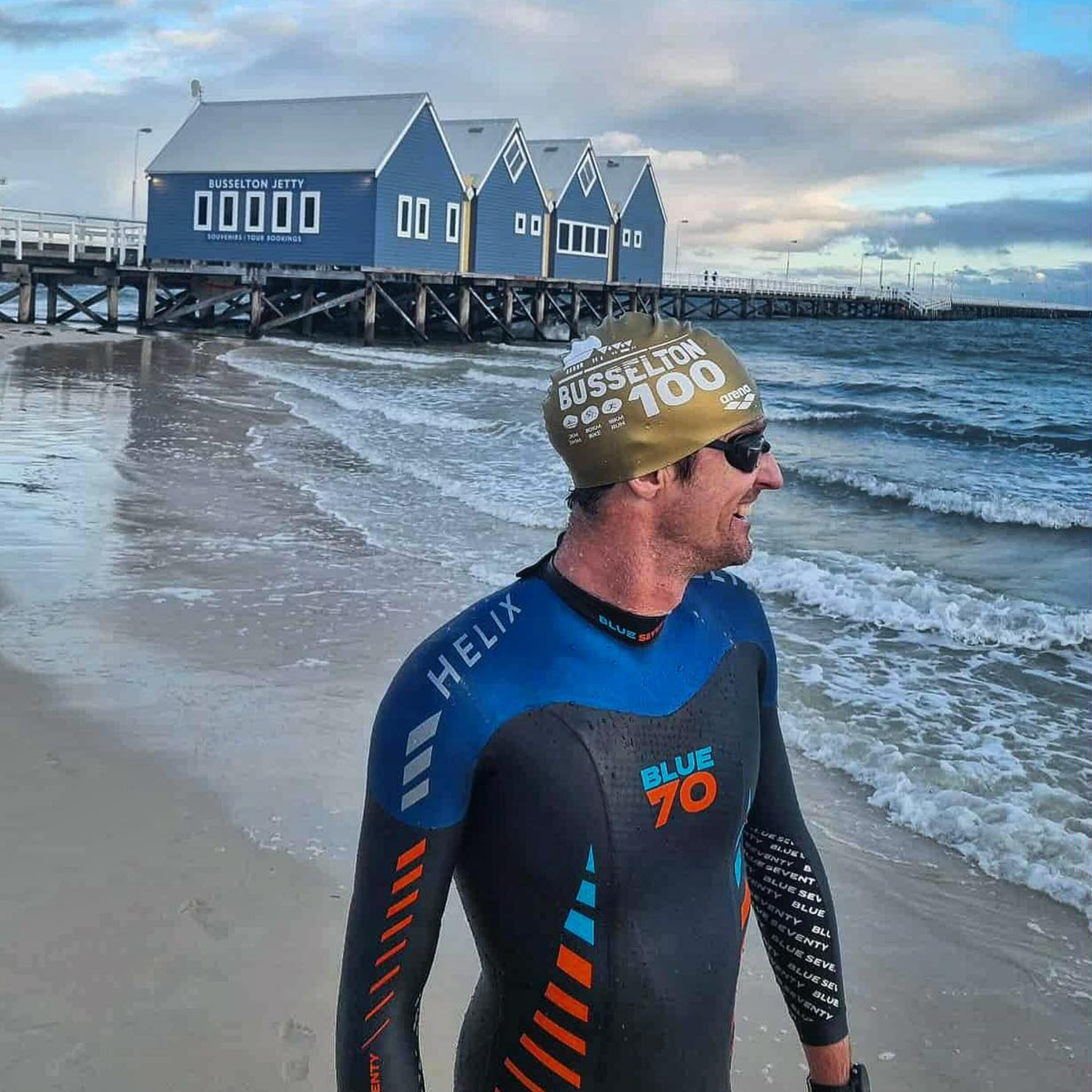
Blue70's model range steers swimmers toward the right suit for their actual training week. The Helix uses thin, flexible neoprene in the arms and shoulders for race-day freedom, and Blue70 is direct that this delicate material will break down more quickly with heavy training use. The Reaction uses higher-grade neoprene and is recommended for frequent, longer swims. The Fusion works for shorter frequent swims. Buying the suit that matches your swim schedule means you are less likely to burn through a race suit in one season and replace it.
Wetsuit recycling is limited. A wetsuit bonds foam to fabric with adhesive, so curbside recycling will not take it. The most effective end-of-life plan is to extend the suit's useful life through repair, then look for a textile or neoprene recycler that specifically accepts wetsuits.
Five ways to reduce your wetsuit footprint
- Test the fit before you commit. Blue70's Test Swim policy lets you swim in a wetsuit and still return or exchange it if it is clean, dry, unmodified, and has tags. Fewer return shipments and fewer unused suits means less waste.
- Match the model to your training volume. A Helix for racing and a Reaction or Fusion for weekly training will last longer than using one race suit for everything.
- Rinse and dry correctly. Rinse with fresh water after salt or chlorine swims. Dry inside out, out of direct sun and away from heat. Heat and chlorine shorten neoprene life.
- Repair small damage early. Fingernail punctures and heel tears are the two common ways swimmers damage a new wetsuit, and neither is covered under warranty. Blue70's care range includes neoprene cement for small repairs.
- Store it flat or on a wide hanger. Tight folds create creases that stress the neoprene over time.
Questions to ask before buying a wetsuit marketed as eco-friendly
- Which components contain recycled material, and what percentage?
- Is the neoprene limestone-based, and where is it processed?
- Are the adhesives solvent-free or water-based?
- Is the claim backed by a third-party certification?
- Does the company publish a repair guide or sell repair materials?
Those questions separate a real change from a color choice. They also apply to any future Blue70 product that makes an environmental claim.
Warranty and repair
The Blue70 warranty covers manufacturing and material defects for one year from the original purchase. It does not cover fingernail punctures, heel tears, zipper damage from force, heat or chlorine damage, or ordinary wear. SwimRun use is covered only on the Alliance. Knowing that coverage line tells you whether to repair or replace a suit.
Take a Test Swim before you commit, and treat repair as part of ownership. Happy swimming.