


Aquathlon removes the bike leg, and that one change should reshape your wetsuit decision. In a triathlon, your suit only has to work until you reach your bike. In aquathlon, the clock does not pause between water and run. Your fingers hit the timing mat and you are already running. That puts two suit qualities at the top of the list: how fast it comes off and how loose your shoulders feel when you start moving on land.
Aquathletes tend to arrive from two places. Some are runners who added a swim. Others are swimmers who added a run. Runners notice the buoyancy right away. Swimmers notice any stiffness in the shoulders. Both groups do better when they choose a wetsuit starting from the swim exit and working backward.
The swim exit is a transition, not a formality
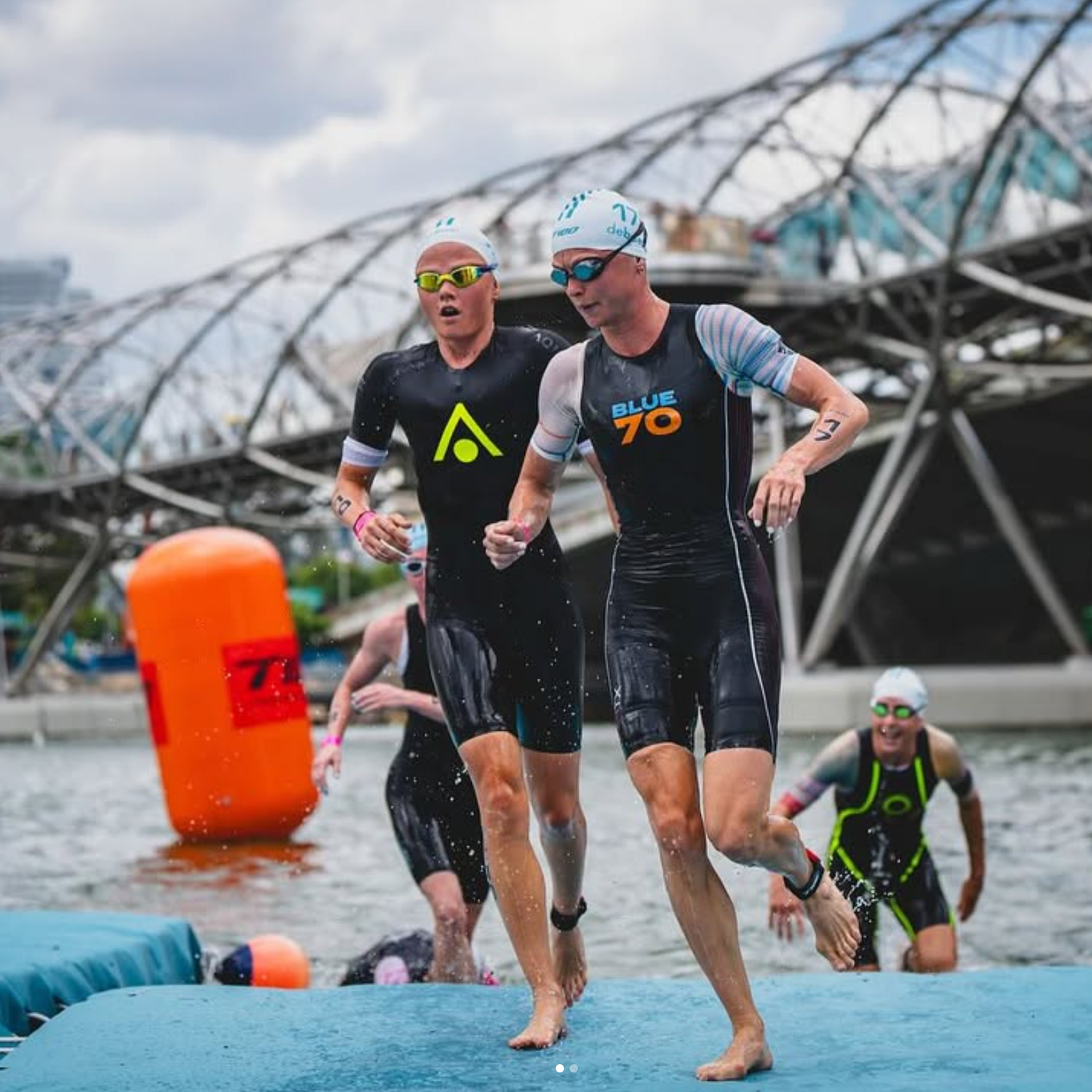
Triathlon gives you a bike transition to shake out your legs and catch your breath. Aquathlon does not. You run straight from the water onto the course. A wetsuit that snags at your ankles or sticks at your wrists costs you seconds and spikes your heart rate just when you need to settle into a running rhythm. Every second in T1 matters because you carry that fumble into your first running stride.
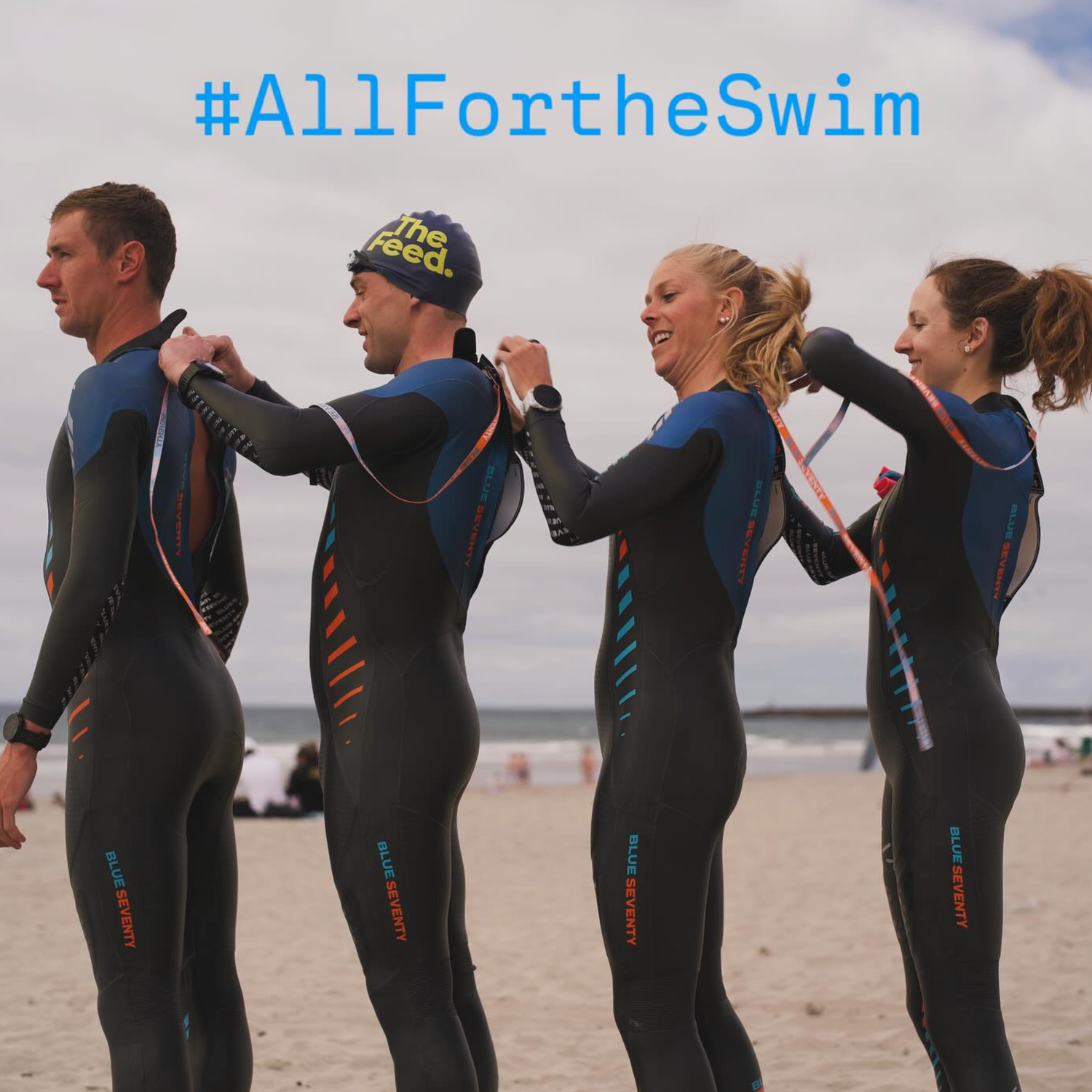
A clean exit comes down to two things: how the suit fits around your ankles and wrists, and how you practiced removing it. Roll the suit down, do not yank it off by the shoulders. That habit prevents heel snags and saves the seams.
Buoyancy still matters, but your run depends on it too
Neoprene lifts your hips and legs, reduces drag, and improves body position. That help is not small. A runner who rarely swims can feel the difference on the first lap. But the suit you would choose for a cold lake in May is not the one you want for a warm August sprint. Below about 56-58°F, thermal protection moves up the list. Above about 70-72°F, a full suit can overheat you on longer swims. Buoyancy equals speed in the water, but only if you still have the legs and lungs to run afterward.
Shoulder freedom before the first running stride
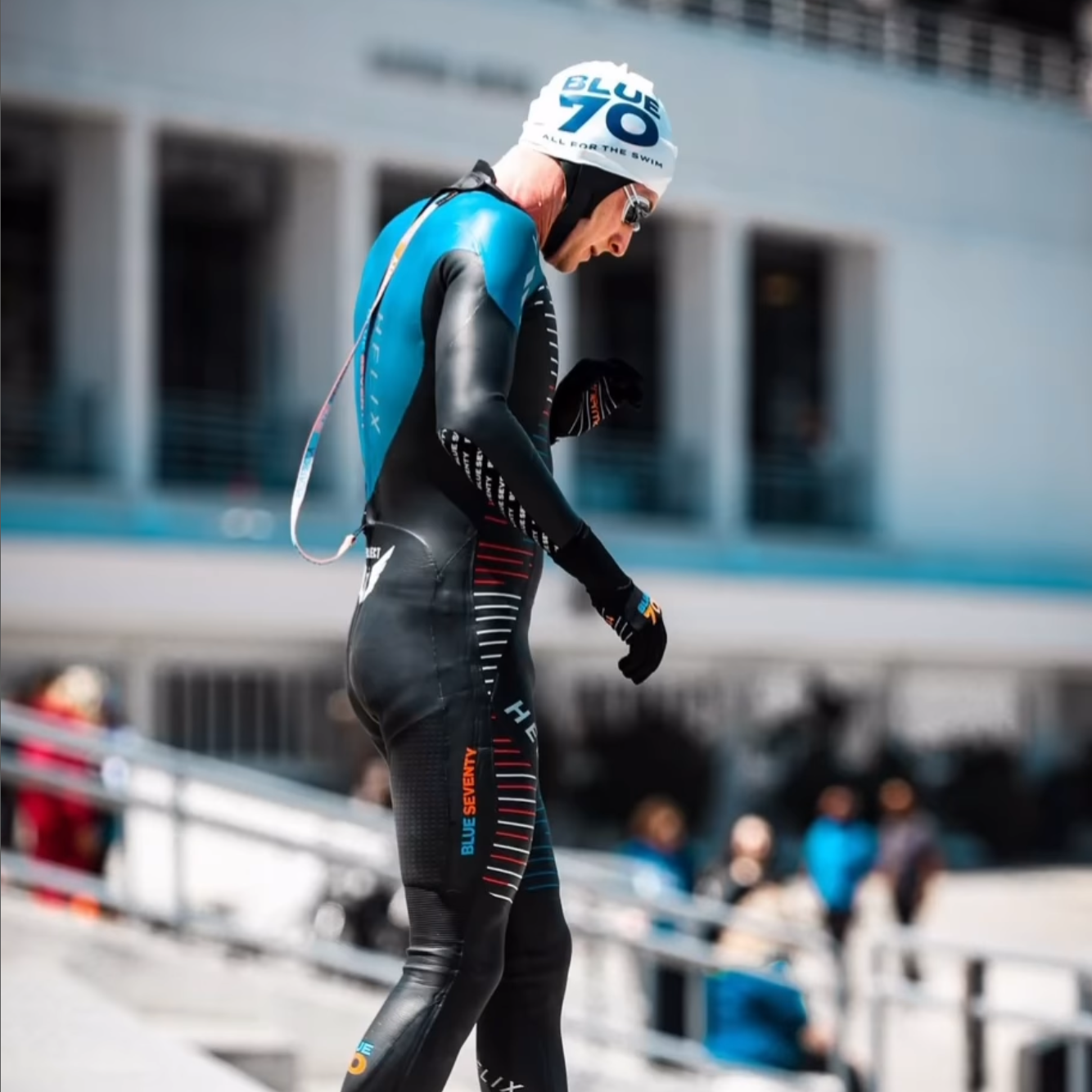
Swimming in a restrictive suit tires your shoulders before you ever start running. Aquathlon gives you no bike leg to recover, so shoulder mobility matters as much as buoyancy. That is why blueseventy builds every wetsuit with Yamamoto neoprene in 38, 39, and 40 cell. Higher cell numbers mean more flexibility. The Helix pushes this furthest with thin, flexible neoprene in the arms and shoulders, a permeable catch panel to preserve feel for the water, and LIFT buoyancy panels to support hip position. That race-day flexibility has a trade-off: the thin neoprene breaks down faster under heavy training use.
If you swim in your suit once a week or more, the Reaction or Fusion handles that workload better. The Reaction uses a higher-grade neoprene and suits longer, more frequent swims. The Fusion works for shorter, frequent sessions. Save the Helix for race day if you train often.
Suit profiles for common aquathlon conditions
Match the suit to your swim distance, water temperature, and training frequency. Use this as a starting point:
- Warm-water aquathlons: A sleeveless suit like the Reaction Sleeveless gives shoulder freedom and less insulation.
- First-timer or short swims: The Sprint is an entry-level full suit built for exactly that.
- Cold water: The Thermal Reaction is purpose-built for cold water and fully lined with Zirconium jersey for added thermal protection.
- Frequent racer who trains in the suit: Reaction or Fusion will outlast a race-day-only Helix.
- A races only: The Helix is designed for total race-day performance.
If the water is borderline warm and the air is hot, a sleeveless suit lowers the chance you overheat before the start.
Fit details that make removal faster
A wetsuit should feel snug on dry land and more comfortable in the water. An improperly donned suit, especially around the shoulders, causes fatigue. For women, blueseventy's Femme Fit includes an extended zipper length. That design makes entry easier, accommodates wider hips, and speeds up transitions. The 2021 Fusion redesign added a lower-sitting neckline for comfort without losing the watertight seal. These details matter twice in aquathlon because you do not have a bike leg to recover from a cramped shoulder or a chafed neck.
When you practice your swim exit, roll the suit down to your ankles instead of pulling from the shoulders. That small change prevents heel and ankle snags and keeps the suit from stretching at the seams.
Care after a swim-run, not a swim-bike
Aquathlon transition areas often mean sand, grass, and dirt. Grit gets into cuffs and necklines. Rinse your suit in fresh water after every race, turn it inside out to dry, and keep it out of direct sun and heat. Fingernail punctures and heel tears are the most common damage. They are not covered under the one-year warranty, which applies to manufacturing and material defects. Small punctures can be repaired with Aquaseal neoprene cement. If you tear a cuff while pulling the suit off, repair it before the next race. A torn cuff only gets worse when you rush the next exit.
Race-day checklist without the bike
- Check your race's wetsuit rules in the athlete guide. Legality cutoffs vary by sanctioning body and change over time.
- Practice the exit: walk out of the water, unzip, and roll the suit down while moving toward your running shoes.
- Lay out your shoes so you can step out of the suit without sitting in sand.
- Take a test swim before race day. Blueseventy's 30-day return policy covers suits that have been swum in, as long as they come back clean, dry, unmodified, and with tags and accessories.
If you have not felt your suit in open water yet, start there. Take a Test Swim and make the swim exit a strength instead of a surprise.