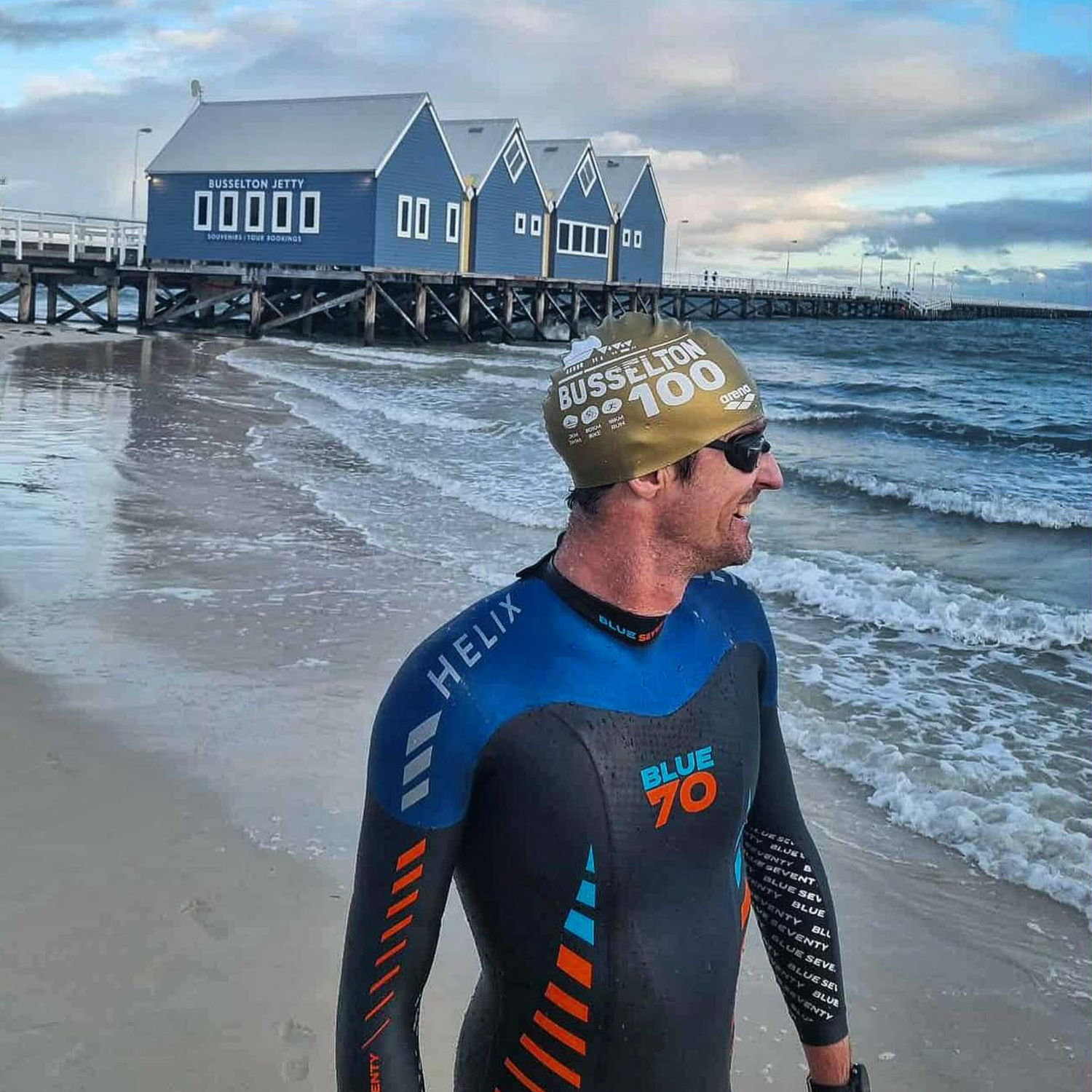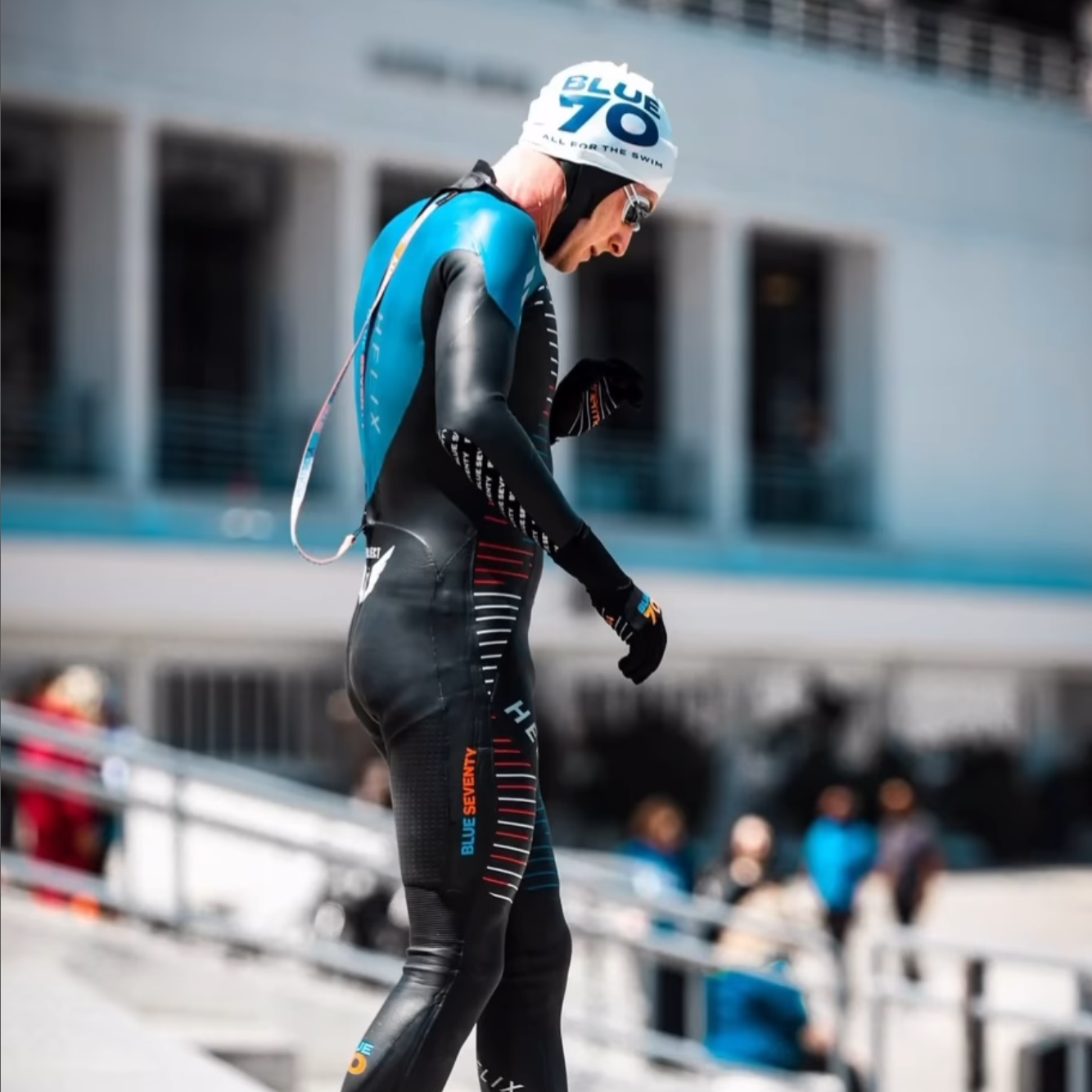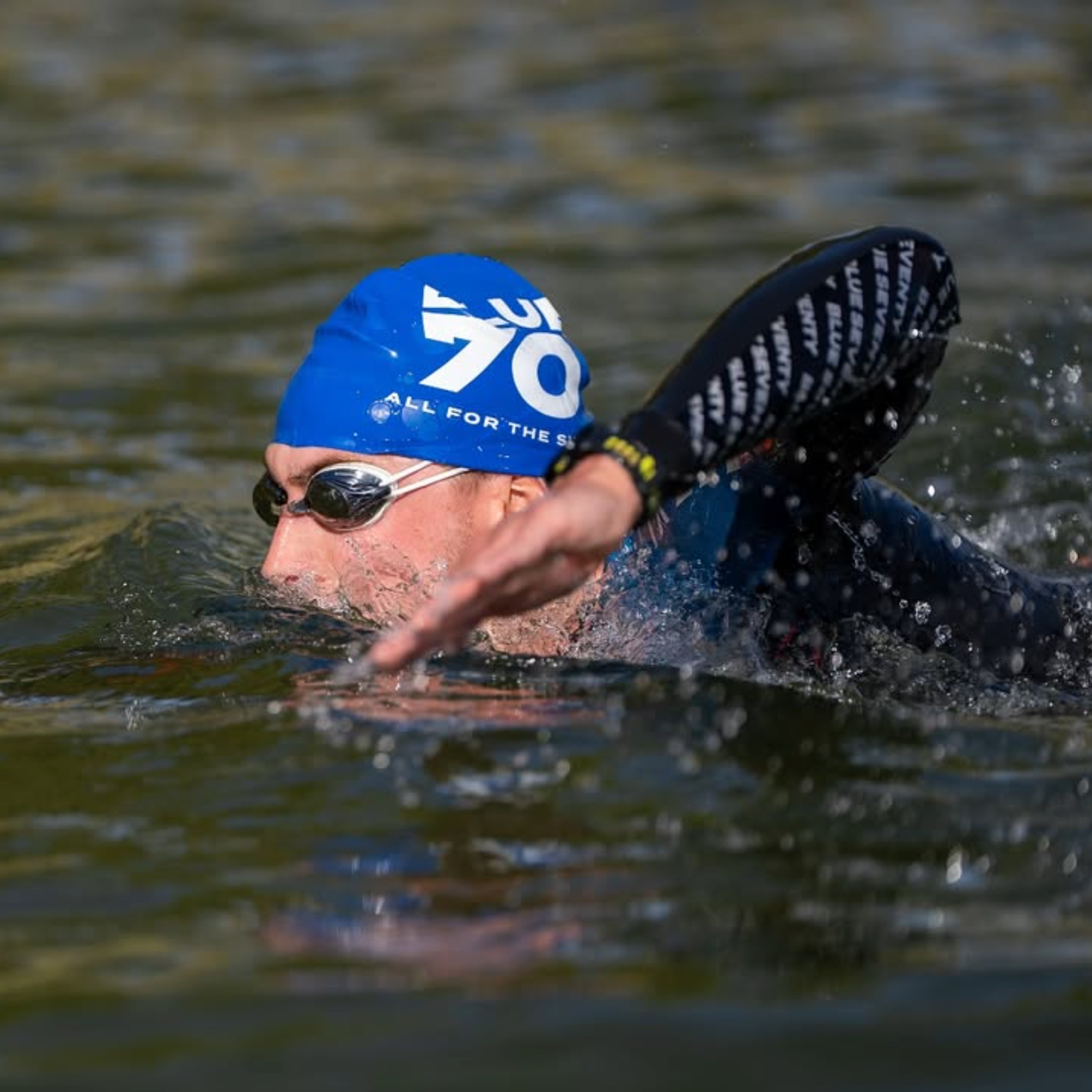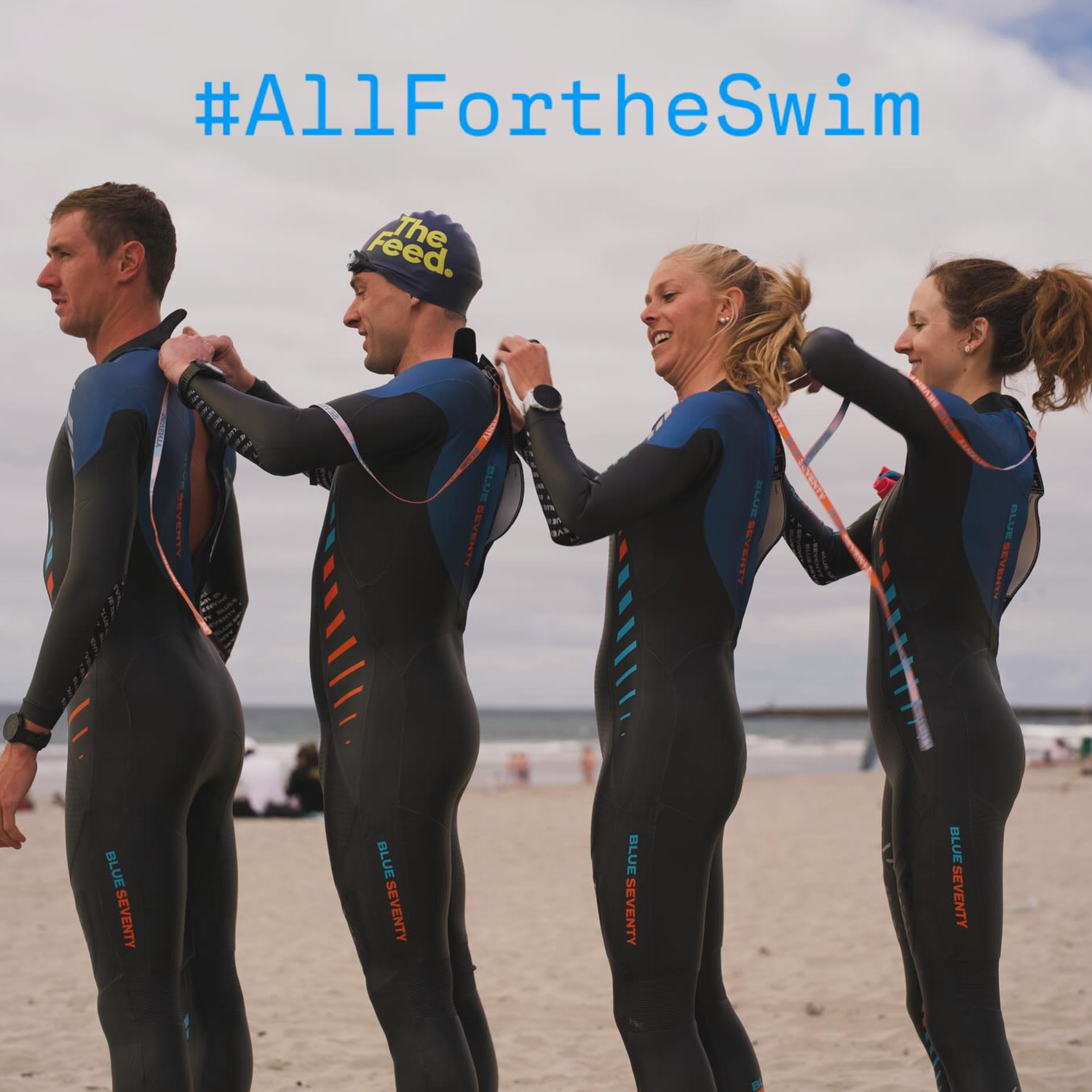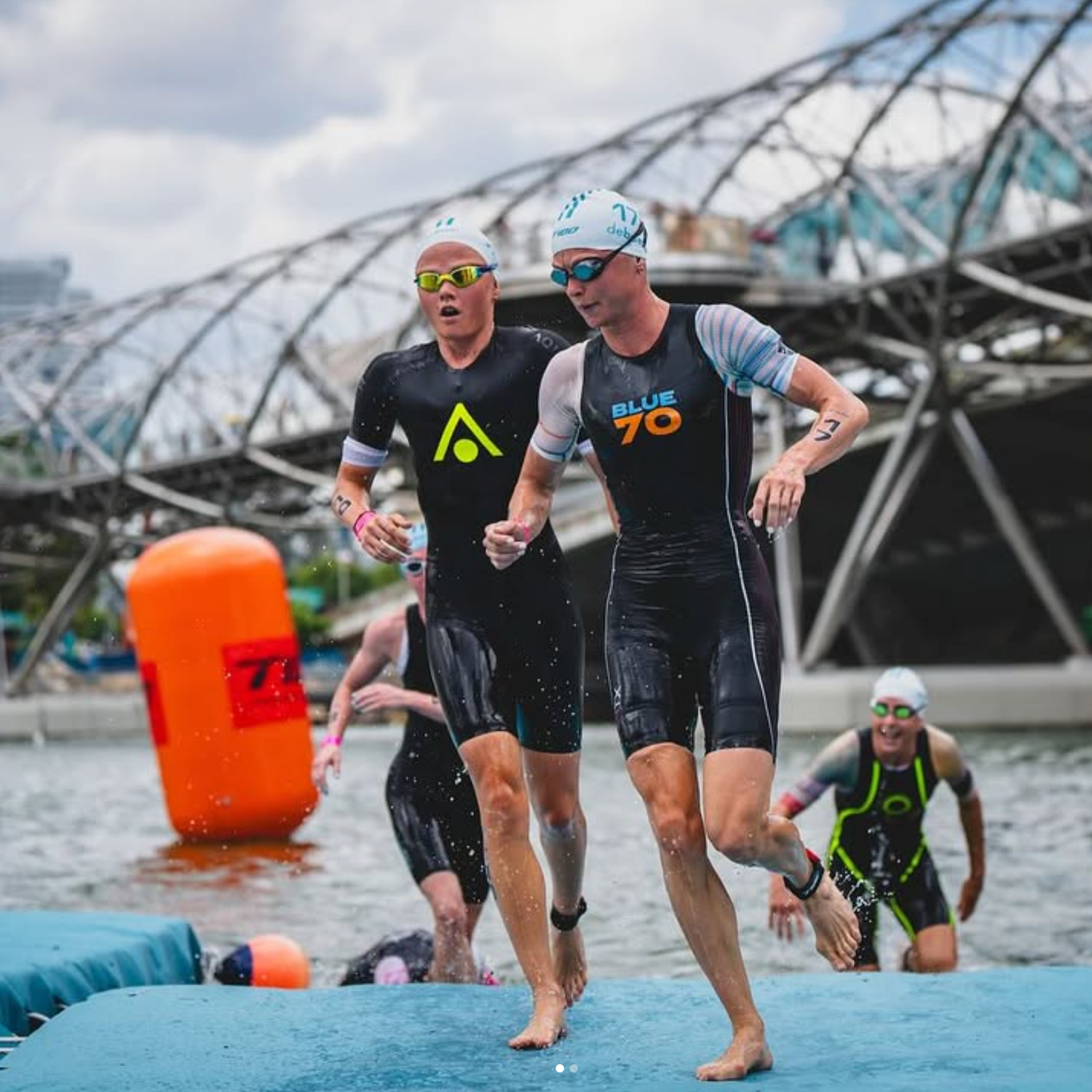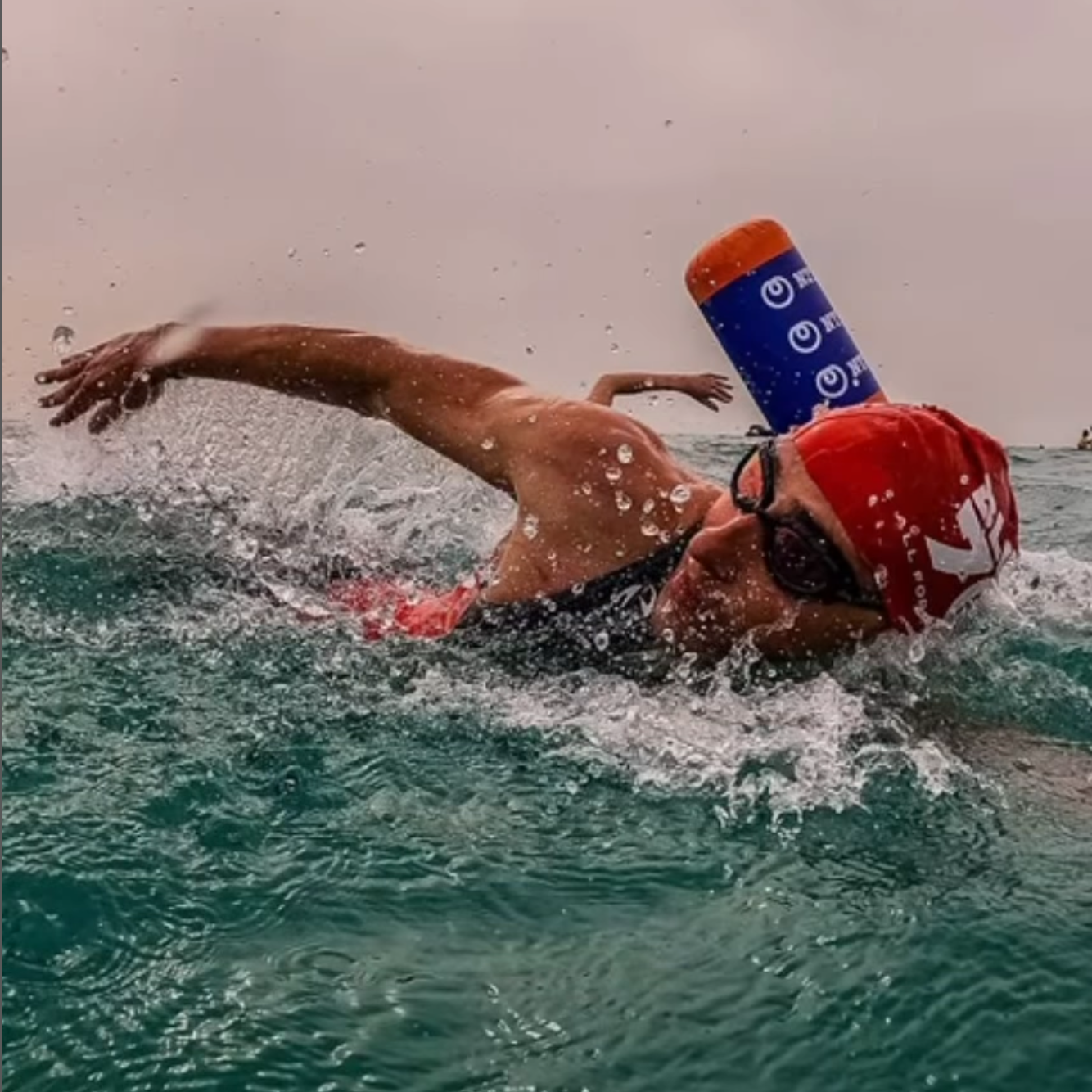



Open-water swimmers plan the entry in detail. The exit gets less thought. You stop swimming, the blood keeps moving, and the cold you left in the lake comes back to meet you. A changing robe is one of the simplest tools for managing that window between water and dry clothes. It does not warm you up by itself, and it does not make a cold swim risk-free. It buys you a dry, wind-blocked space during the minutes when your body is working against itself.
Afterdrop starts when the swimming stops
Afterdrop is the continued fall in core temperature after you leave cold water. During a swim, your body narrows blood flow to the skin and arms, keeping warm blood near your chest and brain. The muscles that drive your stroke generate heat, and your skin gets cold. When you climb out, the exercise stops but the cooling does not stop with it. Blood flow returns to the cold shell of your skin and muscle, picks up heat from the core, carries that heat toward the surface, and shivering starts as the body tries to produce heat by muscle contraction. The problem is that shivering burns energy and makes you clumsy at exactly the moment you need fine motor control for zippers, key pockets, and wetsuit seams. A Saturday lake swim at 52°F feels manageable while you are moving. It becomes a different experience when you stand still in the parking lot five minutes later.
A towel wipes off the surface, but your skin stays damp, your suit stays wet, and any breeze turns that moisture into a cooling surface. A changing robe with a wind-resistant outer layer and a warm lining slows evaporative and convective heat loss. It also gives you a private place to take off a wet suit, which matters if you are changing beside a car or behind a rocky cove. You are not relying on one damp towel and the door of a car. You are standing inside a small, protected space that holds the heat you are still producing.
What to look for in a changing robe
The two parts that do the actual work are the outer shell and the lining. Look for a water-resistant shell that will not soak through when you sit on wet grass or rest a wet suit on it. The lining should feel warm when damp and dry reasonably fast, because you will put it away wet more often than you expect.
- Length: A robe that ends above the knee works for a quick change in May. A longer cut helps when the water sits in the low 50s and the car is a ten-minute walk away.
- Two-way zipper: It lets you open the bottom to move your legs while your chest stays covered.
- Hood: A hood holds heat around your head and neck, where you lose warmth quickly.
- Deep inner pocket: It keeps gloves, a hat, or a car key dry and close at hand.
Change slowly enough to protect your wetsuit
Cold hands damage wetsuits. When you are shivering, you pull harder, grip with fingertips, and tear thin neoprene at the shoulders or ankles. A changing robe gives you a dry layer before you start pulling at the suit. Leave the top half of your wetsuit on, put on a dry base layer, and then pull the suit down using flat palms instead of fingernails. Stand on a mat or inside the foot area of a long robe rather than on gravel. Gravel cuts neoprene.
Fingernail punctures and heel tears are not covered by the blueseventy warranty. They come from force, not from a defect in the suit. After the swim, rinse the suit in cool, fresh water and hang it to dry inside out. The robe buys you the calm to do that instead of stuffing a damp suit into a bag.
Layer up before your fingers go numb
On cold days, a changing robe works best over clothes, not directly on wet skin. After the swim, pull the top of your wetsuit down and put on a light wool or synthetic top. Then put on the robe. This traps warm air near your chest while you finish changing. Remove the wetsuit, dry your legs, add bottoms, and keep moving. If you stand still in wet neoprene, the robe can only slow heat loss, not stop it.
The order matters because your hands lose dexterity quickly in the cold. Fasten zippers and close pockets before your fingers go numb, not after. A base layer, a warm hat, and dry socks do more for your comfort than any single piece of gear. The robe holds that system together.
When a changing robe is extra baggage
For a pool swim or a hot summer triathlon, a changing robe may be more than you need. If the water is above about 70°F and the air is warm, a towel and dry clothes handle the same job with less bulk. The robe earns its place for cold lake swims, early spring open-water sessions, and any day when the walk from the water includes wind, shade, or a long transition. In water below about 56°F to 58°F, a thermal wetsuit is the more important first layer. The robe becomes part of the exit plan rather than the whole plan.
The swim ends when warmth returns
The exit is part of the swim. You stop moving, your temperature can keep falling, and the decisions you make in those next ten minutes determine how the rest of the day feels. A changing robe supports that window. It works best alongside acclimatization and good judgment, not instead of them.
If your wetsuit fit adds struggle to the exit, start there. A suit should feel snug on land and easier in the water. Check the fitting guide and size charts at blueseventy.com, and take a test swim before race day. Happy swimming.