


TAsk a group of triathletes how long a wetsuit should last, and most people will answer in years. That sounds practical, but it misses the part swimmers actually feel. A swim-specific wetsuit usually starts aging in the water before it looks old on the hanger. The first clue is often a change in shoulder freedom, body position, or how cleanly the suit comes off in T1.
That is why wetsuit lifespan is better judged by swim feel than by the date on the receipt. A suit can still look good, still zip, and still keep its shape on the rack, yet no longer deliver the same freedom through the stroke that made it fast and comfortable when it was new.
Why “how many years?” is the wrong starting point
A wetsuit does not age in a straight line. It wears down through repeated stretch, repeated compression, salt, chlorine, sun, heat, and handling. It also wears differently depending on how often you swim in it and what the suit was designed to do. A race-day suit used for a few key swims each season lives a different life from a suit used once or more each week for regular open water training.
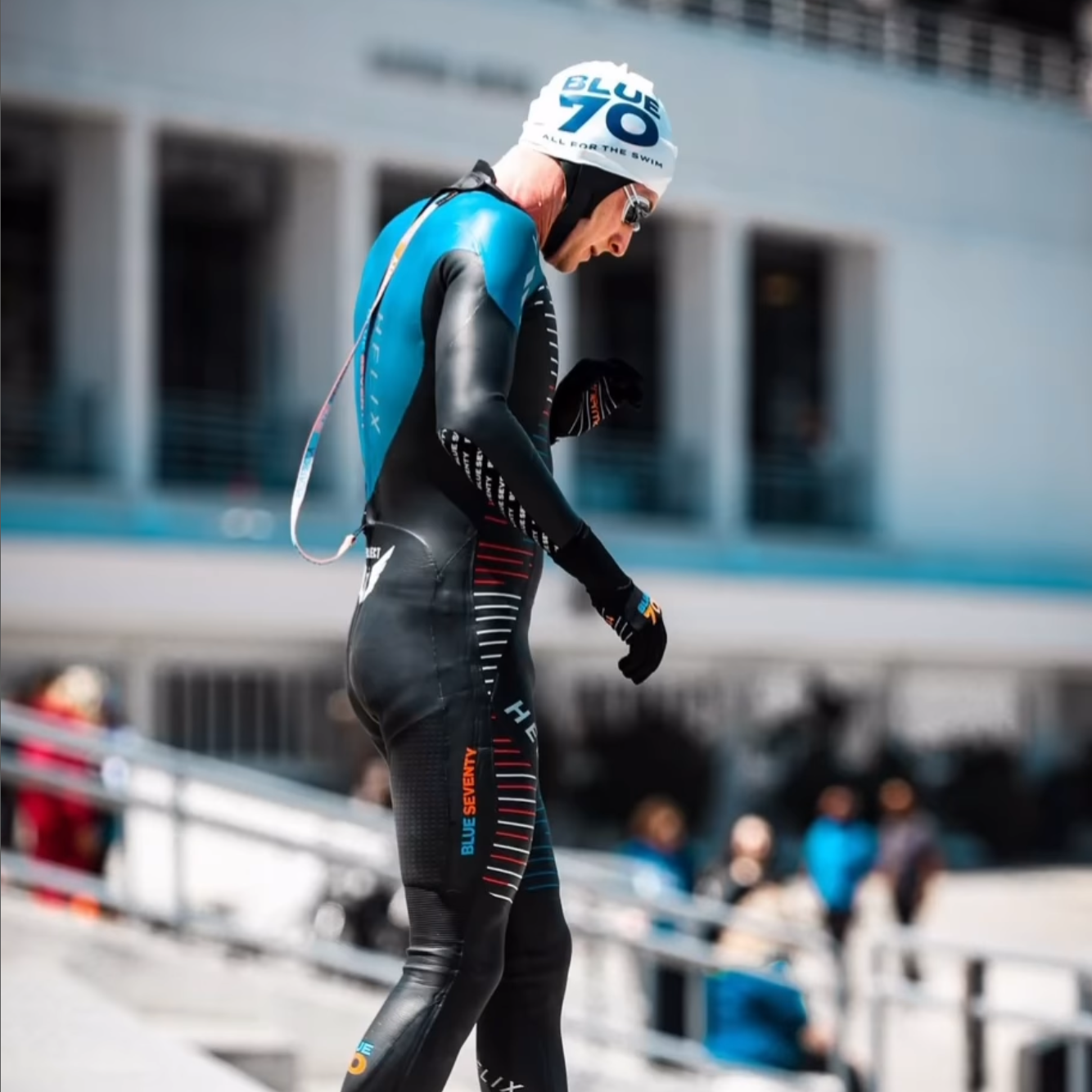
That distinction matters with swim-specific design. Blue70 is candid about it. The Helix is built for race-day performance, with very thin, highly flexible neoprene in the arms and shoulders, a permeable catch panel to preserve feel for the water, and LIFT buoyancy panels. Blue70 also notes that this delicate neoprene is not ideal for heavy training use. That is not a contradiction. It is the cost of pushing flexibility and feel to the front of the design brief.
If you swim often, Blue70 points athletes toward the Reaction for frequent, longer swims and the Fusion for shorter, frequent swims. That advice is about more than price. It is about matching construction to workload.
Three kinds of wetsuit life
Most athletes will make better decisions if they separate wetsuit lifespan into three categories.
- Service life: the suit still functions and can be worn.
- Performance life: the suit still gives you the shoulder freedom, buoyancy, and body position you want.
- Storage life: the suit has been kept in conditions that protect the neoprene, seams, and zipper.
These do not end at the same time. A wetsuit may have years of service life left and still be past its best as a race suit. Another may have seen little water time but lose useful life from heat, creasing, or poor storage.
The contrarian truth about premium suits
Many swimmers assume the top suit in a lineup should also last the longest under hard use. In practice, that is often backwards. The features that make a high-performance suit disappear around your stroke also demand better care. Thin shoulder panels move beautifully through the recovery and catch, but they do not love hurried donning, rough removal, or repeated abuse in training.
For athletes who train regularly in open water, one of the smartest decisions is often to stop asking one wetsuit to do every job. A training-focused suit for regular mileage and a race-day suit for key sessions can protect performance life far better than pushing one delicate suit through every swim of the season.
Where wetsuits actually wear out
Most suits do not fail all at once. They fade in predictable places, and the pattern tells you a lot about how the suit has been used.
Shoulders and upper back
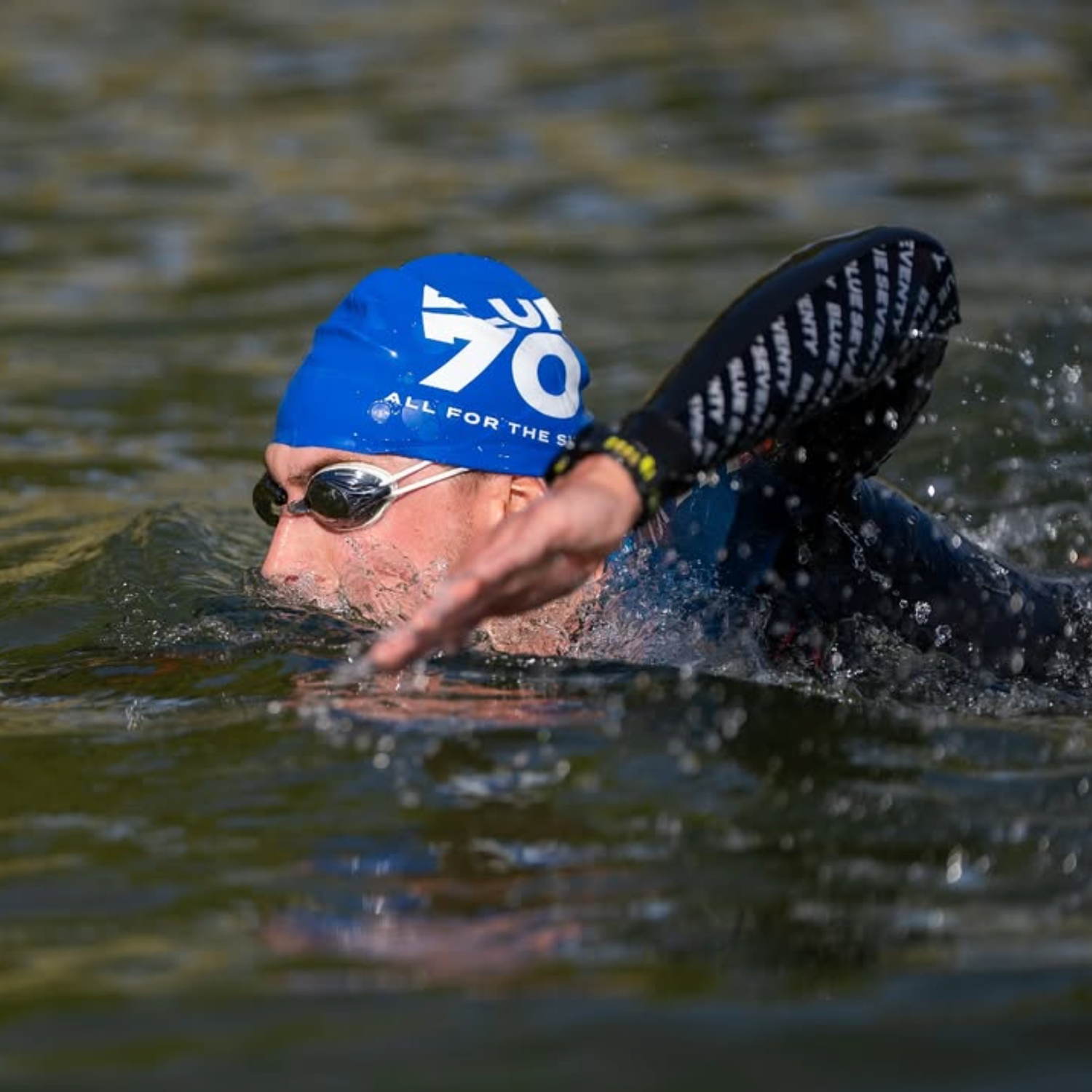
This is where swimmers often notice age first. Every stroke asks the neoprene to extend and recover. Over time, repeated shoulder motion changes how easily the suit moves with you.
Surface nicks and punctures
Small cuts from fingernails and heel tears are common enough that Blue70 lists them in its warranty exclusions. Those are usually handling injuries, not swimming injuries.
Seams and zipper area
Entry, exit, and storage all load the seam lines and zipper base. If the zipper starts feeling sticky or unstable, or the seams look stressed, the suit is telling you something early.
Compression and creasing
Neoprene does not like being folded hard or crushed under other gear. If a suit spends long stretches stuffed into a bag or buried under equipment, the foam can take a set.
Heat, chlorine, and sun
Blue70 excludes heat and chlorine damage from warranty coverage for a reason. Rinse the suit after every swim, and keep it out of direct sun while drying.
The signs your wetsuit is losing performance life
The obvious mistake is waiting for a major tear. Most wetsuits send quieter signals first.
- Your shoulders feel heavier late in the swim.
- Recovery and hand entry feel less free.
- The chest and neckline do not settle as smoothly after proper donning.
- The suit is harder to peel off quickly in transition.
- Small nicks start showing up near cuffs, ankles, or hips.
- Seams look stressed in high-movement areas.
A simple test works well. Swim a familiar session in calm conditions. If the suit is positioned correctly and still feels restrictive in places where it used to feel smooth, the neoprene may be losing some of the flexibility that gave the suit its best swim feel.
Fit mistakes can shorten lifespan fast
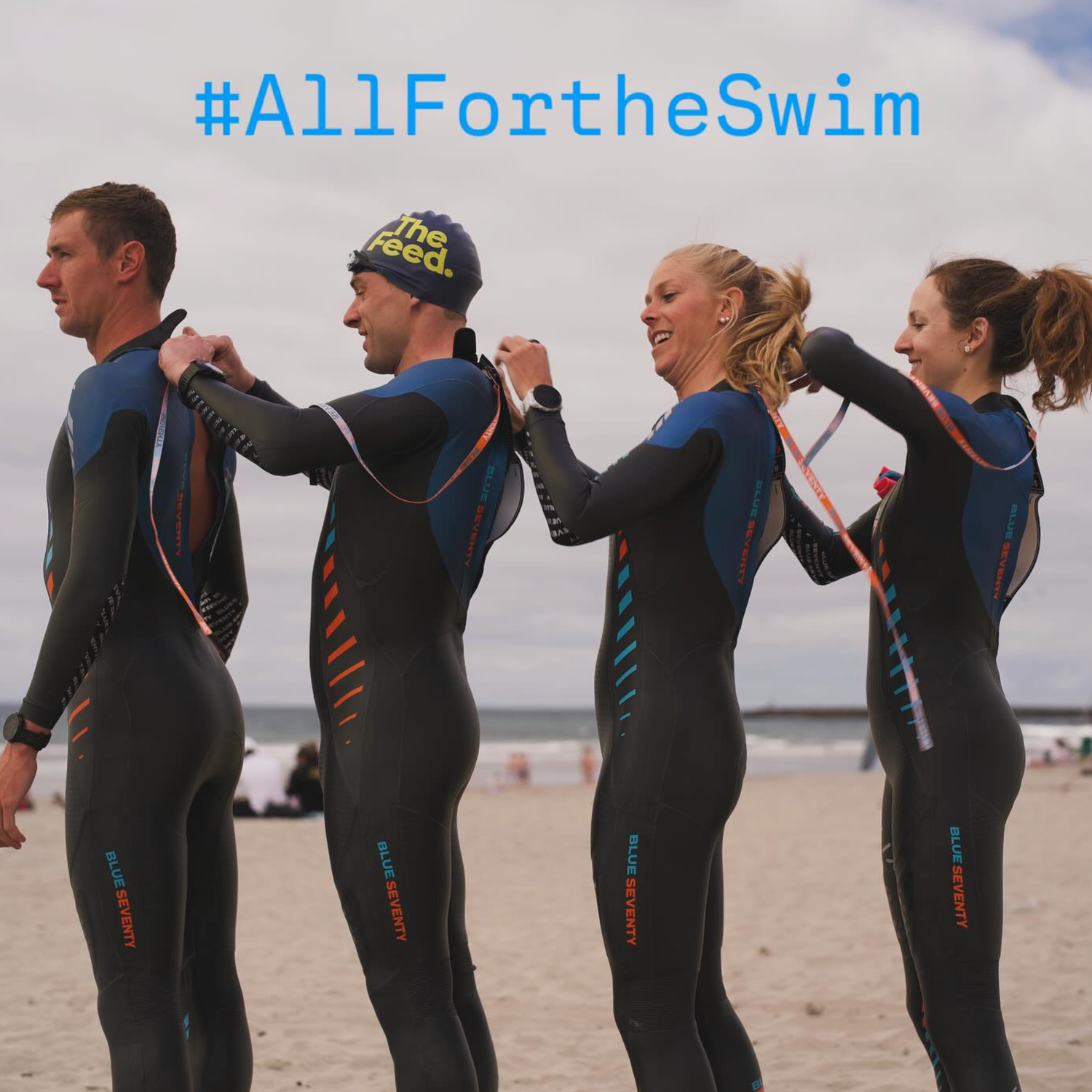
Some wetsuits wear out early because they are never put on correctly. Blue70’s fit guidance is straightforward: the suit should feel snug on land and more comfortable in the water. If it is not fully worked up through the legs, hips, torso, and shoulders before you zip it, the material gets over-stretched where you need freedom most.
That mistake costs you twice. It makes the swim feel worse, and it puts unnecessary strain on the neoprene every time you use it.
- Use fingertips, not nails.
- Work the suit up gradually from the ankles and calves.
- Set the hips and torso high before settling the arms.
- Lift material into the armpits and shoulders before zipping.
- Zip the suit only after it is fully seated.
Get this right and you usually notice an immediate difference in shoulder comfort.
Water temperature changes the wear equation
Choosing the right suit for the conditions also affects lifespan. Blue70’s guidance gives two useful reference points. Below about 56 to 58°F, a purpose-built thermal suit such as the Thermal Reaction adds thermal protection for cold-water swimming. Above about 70 to 72°F, a full suit can feel too warm over longer swims, and a sleeveless option may be the better choice.
Using the right suit reduces unnecessary stress. If you are overheating, tugging at the neckline, or forcing a full suit into conditions better suited to something simpler, you are adding wear for no good reason.
Race-day habits matter more than most athletes think
Some of the hardest wear has nothing to do with your stroke. It comes from race-weekend handling.
- Standing in direct sun too long while fully suited up
- Sitting on rough pavement or pool decks
- Yanking the suit off instead of peeling it down in stages
- Leaving it wet in a gear bag or car after the race
- Practicing exits carelessly instead of cleanly
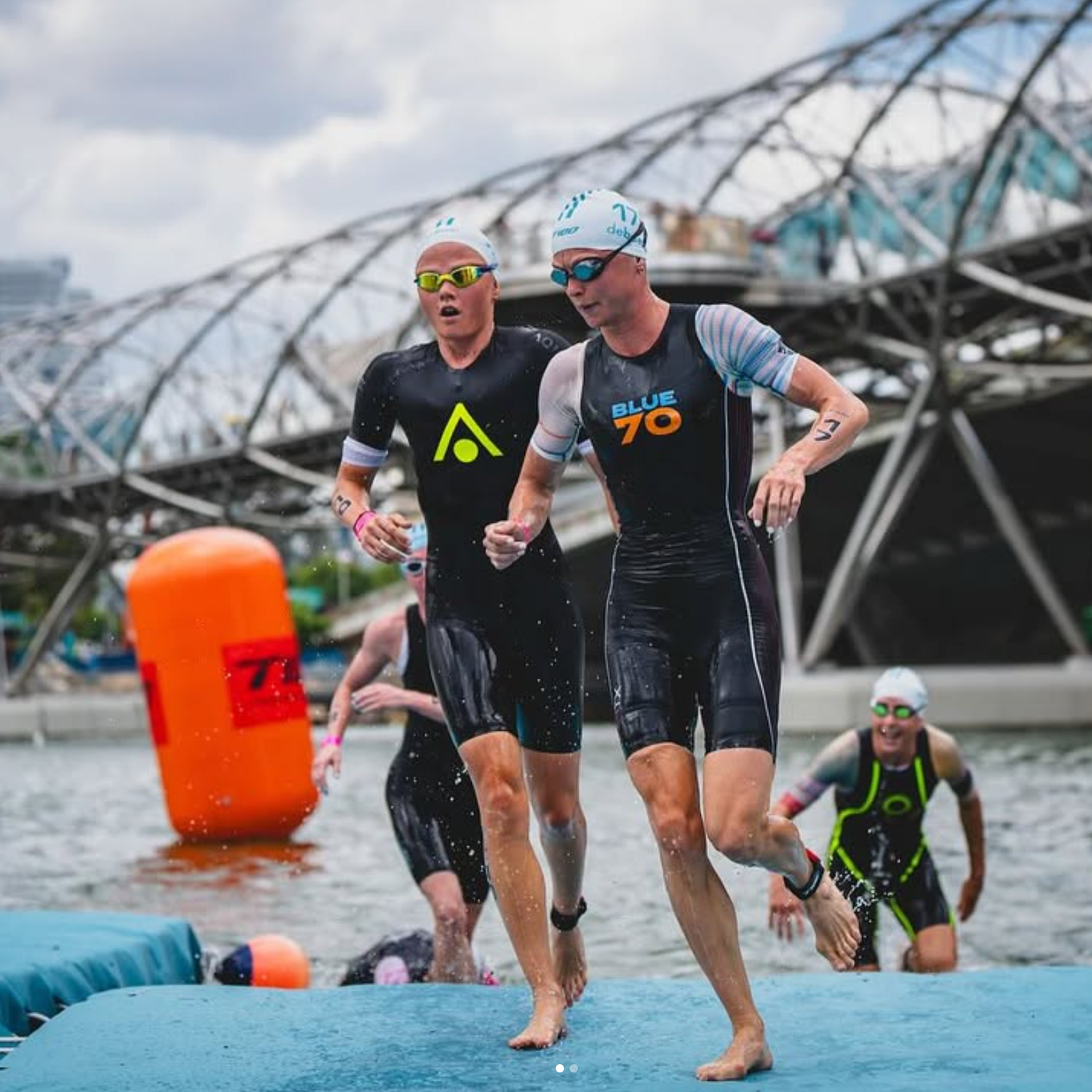
A controlled wetsuit exit protects the suit and often produces a better transition routine. Force is not technique.
How long a wetsuit lasts depends on how you swim in it
An occasional racer and a weekly open water swimmer should not expect the same answer from the same suit.
Occasional racer
If you race a few times each year, rinse the suit after use, dry it indoors, and store it properly, it can stay in service for years. In this case, storage habits may matter more than swim volume.
Weekly open water swimmer
If you swim in the suit once a week or more, repeated stretch and exposure build up faster. Pay close attention to shoulder feel, seam condition, and small cuts before they spread.
One-suit-for-everything athlete
This athlete usually shortens performance life the fastest, especially in a very flexible race suit. The suit may remain usable, but “usable” and “at its best” are different standards.
Modern wetsuits last differently because they perform differently
Older ideas about wetsuit durability often came from thicker, less swim-specific designs. Modern swim-specific wetsuits are tuned more precisely to what happens during the stroke. Blue70’s product history reflects that shift. The Helix added the permeable catch panel to preserve feel for the water, then later gained LIFT buoyancy panels. The Thermal Reaction brought a full Zirconium jersey lining for cold water. The Fusion redesign in 2021 introduced a lower-sitting neckline for comfort without losing a watertight seal.
Those developments improved how the suit behaves in the water. They also changed how swimmers should judge lifespan. The right standard is not whether the suit survived. The right standard is whether it still performs the job it was built to do.
How to get more life out of your wetsuit
A good care routine is simple and repeatable.
- Rinse after every swim. Fresh water removes salt, lake residue, and chlorine.
- Dry it out of direct sun. Turn it inside out first, then reverse it once the lining is dry.
- Store it without hard folds. Use a wide hanger or lay it flat if you can.
- Match the suit to the session. Save highly flexible race suits for racing and key workouts if you swim often.
- Repair small damage early. Blue70 carries Aquaseal neoprene cement in its wetsuit care category for minor repairs.
If you want help with fit before wear becomes an issue, the Blue70 fitting guide is a good place to start.
When it is time to replace it
Replace a wetsuit when it no longer matches the job you need it to do. For newer swimmers, an older suit may still offer plenty of value because buoyancy improves body position and supports a more efficient swim. Blue70’s guidance notes that beginners tend to gain proportionally more from a wetsuit than advanced swimmers do.
For experienced triathletes and open water swimmers, the standard is higher. If shoulder freedom has faded, if removal is getting slower, or if the suit no longer feels smooth through the stroke, replacement starts to make sense even if the suit still looks presentable.
- Keep it in regular use if the fit is still snug, the shoulders still feel free, and the seams and zipper remain dependable.
- Move it to backup or training duty if race-day feel has faded or small repairs are starting to add up.
- Replace it if damage is spreading, seam or zipper reliability is declining, or the suit no longer supports your current swimming goals.
Judge the suit by the swim it still gives you
A wetsuit does not retire because a calendar says so. It moves out of one role and into another when the fit, flexibility, and feel in the water change enough to matter.
That is the better way to think about lifespan. Do not ask only how many years a wetsuit should last. Ask whether it still gives you the body position, shoulder freedom, and confidence you want for the way you swim now.
If you are deciding between a race-day suit and a more frequent-use option, or if you want to check that your current suit is still fitting the way it should, take a look at the Blue70 size charts or Take a Test Swim to dial in the right setup for your season.