


When you search for wetsuit try-on stores near you, what you actually want to know is whether a suit that matches your height and weight will still let you rotate your shoulders twenty minutes into a race. A mirror cannot answer that. Standing still with your arms at your sides cannot answer it either. The answer comes from a few specific movements you perform in the suit before you get near the water.
Size charts sort by height and weight. That is a practical starting point. Two swimmers with the same height and weight can have different torso lengths, shoulder widths, and hip shapes. A long torso and a broad chest can both land in a medium yet need different panel lengths. The chart gets you close. The fitting decides the rest.
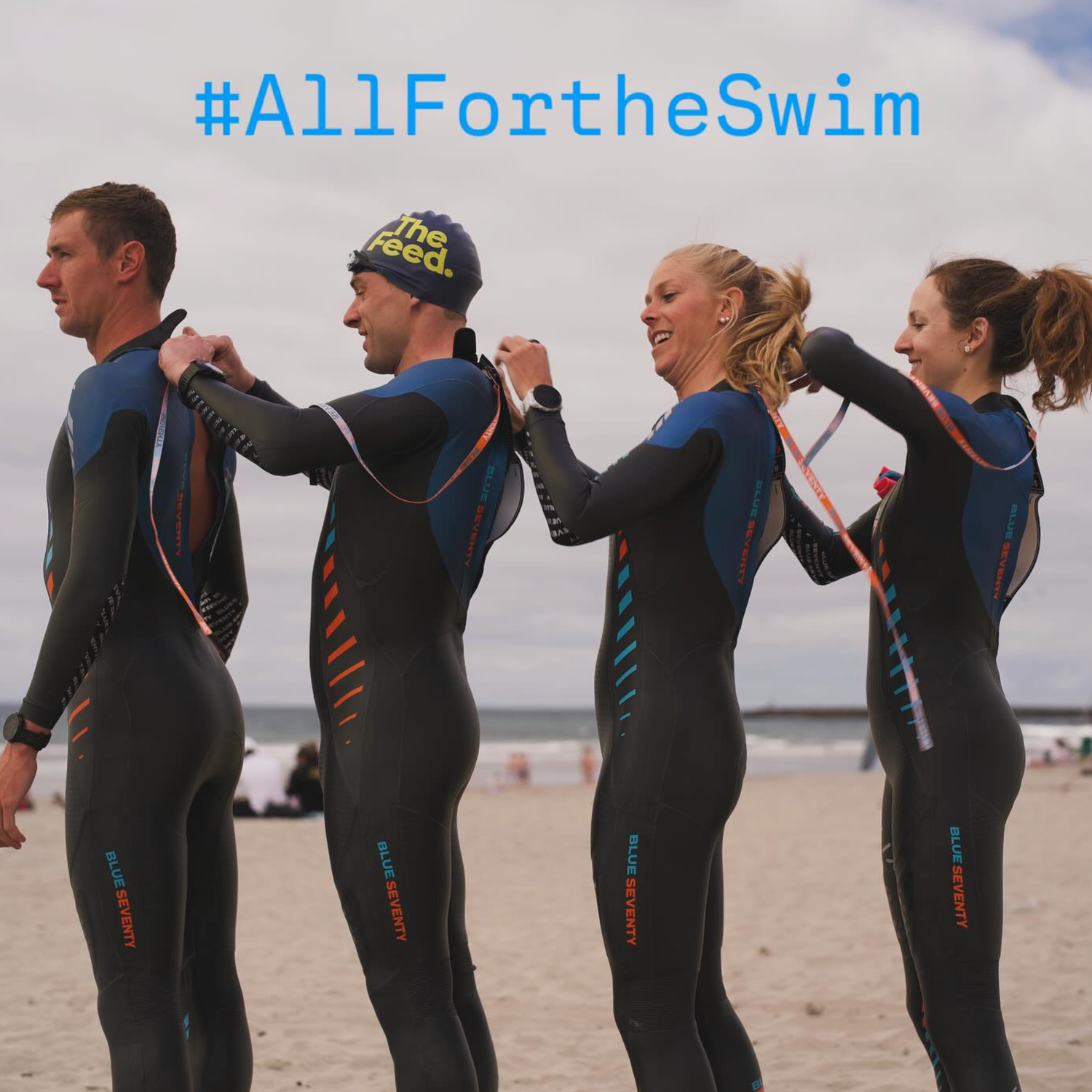
Use the blueseventy store locator to find a dealer near you. Call ahead. Ask if they stock swim-specific suits in multiple sizes and whether they carry women's-specific patterns.
For women, this matters more. Blueseventy's Femme Fit refines the pattern in the bust, torso, wrist, and ankle. It also lowers the neckline and extends the zipper length. The line expanded to 15 women's sizing options in 2014. If a women's suit pulls across the chest or slides up at the wrists, that is a pattern issue as well as a size issue. Ask for the women's model, not a smaller men's size.
Start with a suit built for how you swim
A swim-specific wetsuit is built around a horizontal body position, a high elbow catch, and the need to let a thin layer of water in. The neoprene grade matters. Blueseventy suits use Yamamoto 38, 39, and 40 cell neoprene. Higher cell numbers mean more flexibility. A suit built with flexible panels in the arms and shoulders will feel different in a streamline reach than a suit built for frequent training.
Ask the store to pull the model that matches how often and how far you swim. If you train once a week in open water, a durable training suit will serve you better than the thinnest race suit. If you race several times a season and want every edge, a race-focused suit makes sense. The store staff can guide you through that choice.
Three dry-land movements that expose fit problems
Most people try on a wetsuit and stand upright with arms at their sides. That position hides the fit issues that appear in open water. The suit has to work when you are horizontal and your arms are moving. Three dry-land positions will tell you more than a mirror check.
- Streamline reach. Stand tall, lock your hands overhead, and reach. This loads the shoulders and lats the way a push-off does. The suit should allow the reach without yanking the neckline open or biting into the armpit. Sharp restriction across the upper back means the shoulder panel is too short.
- Catch and pull simulation. Bend slightly at the hips and move one arm through a slow freestyle pull. The lower back of the suit should stay against your body. If it gaps there, water will enter and pool. If the legs ride up when you raise a knee, the torso or crotch panel is too short.
- Sighting and breathing. Turn your head as you would to sight. The collar should stay put. If the neck seal lifts or digs into your throat, that suit will become a distraction within 500 meters.
Do these slowly. You are not testing speed. You are testing whether the suit fights you.
The in-store checklist for neck, wrists, ankles, and torso
Run these checks before you leave:
- The neck seal sits lower at the front, higher at the back, and follows your head turn without lifting.
- The wrist and ankle seals hug without leaving deep red marks. A little tightness is normal. A wetsuit lets a thin layer of water in. Your body warms that water to insulate.
- The zipper lies flat and closes without force. If it pulls hard across the shoulders, the torso is too short.
- The torso has no loose folds at the lower back when you bend. Some bunching at the belly is okay.
- There is no downward drag at the crotch when you step or raise a knee.
- The suit feels snug, not painful. It will feel tighter on land than in the water.
What to bring and what to ask a dealer
Wear a swimsuit or race kit. Cotton undergarments create friction and folds, and they change how the suit sits. If the store allows, use plastic bags on your hands and feet to slide in. If not, use the pads of your fingers. Never use your nails. Fingernail punctures are a common cause of wetsuit damage, and blueseventy's warranty does not cover them.
Try two adjacent sizes. Try the size the chart suggests and the next size up or down, depending on where you feel tightness or looseness. Ask the staff how the suit should be donned. The fit guide shows the correct sequence. Getting the suit fully seated in the armpits and shoulders before you zip it is the step that prevents a lot of early-shoulder tightness.
Ask about the store's return and exchange terms before you pay. For suits purchased from blueseventy.com, the Test Swim policy lets you swim in the suit and still return or exchange it, provided the suit is clean, dry, unmodified, and has tags and accessories included.
What a fitting room cannot replicate
A dry fitting cannot reproduce horizontal buoyancy. You cannot feel whether the suit will sit flush at the hips when the water supports your body or whether the neck seal leaks when you sight into the sun. The only way to know is to swim in the suit.
That is why the Test Swim policy matters. You can take the suit into the water and still return or exchange it if the fit is wrong. For store purchases, ask the dealer about their own terms.
One safety note. A wetsuit adds buoyancy and can improve body position, but it is not a personal flotation device. It is not Coast Guard-certified, and it is not a substitute for open water safety planning. In a fitting, its job is fit and mobility, not rescue.
After the fitting, write down the pressure points
Before you leave, note the model, size, and where the suit pinched or gaped. If you are between sizes, bias toward the smaller size only if you can still do the streamline reach without sharp shoulder restriction. A suit that feels loose on land will move more in the water. A suit that feels snug but not restrictive on land often feels right once you start swimming. Confirm the size against the online chart at home.
The best local try-on is the one where you test movement. Zipping the suit up is only the first step. Use the store locator, review the fit guide, and read the Test Swim policy before you go. Bring a swimsuit, your race kit, and a list of these movement tests. You will leave with more useful information than any mirror can give you.