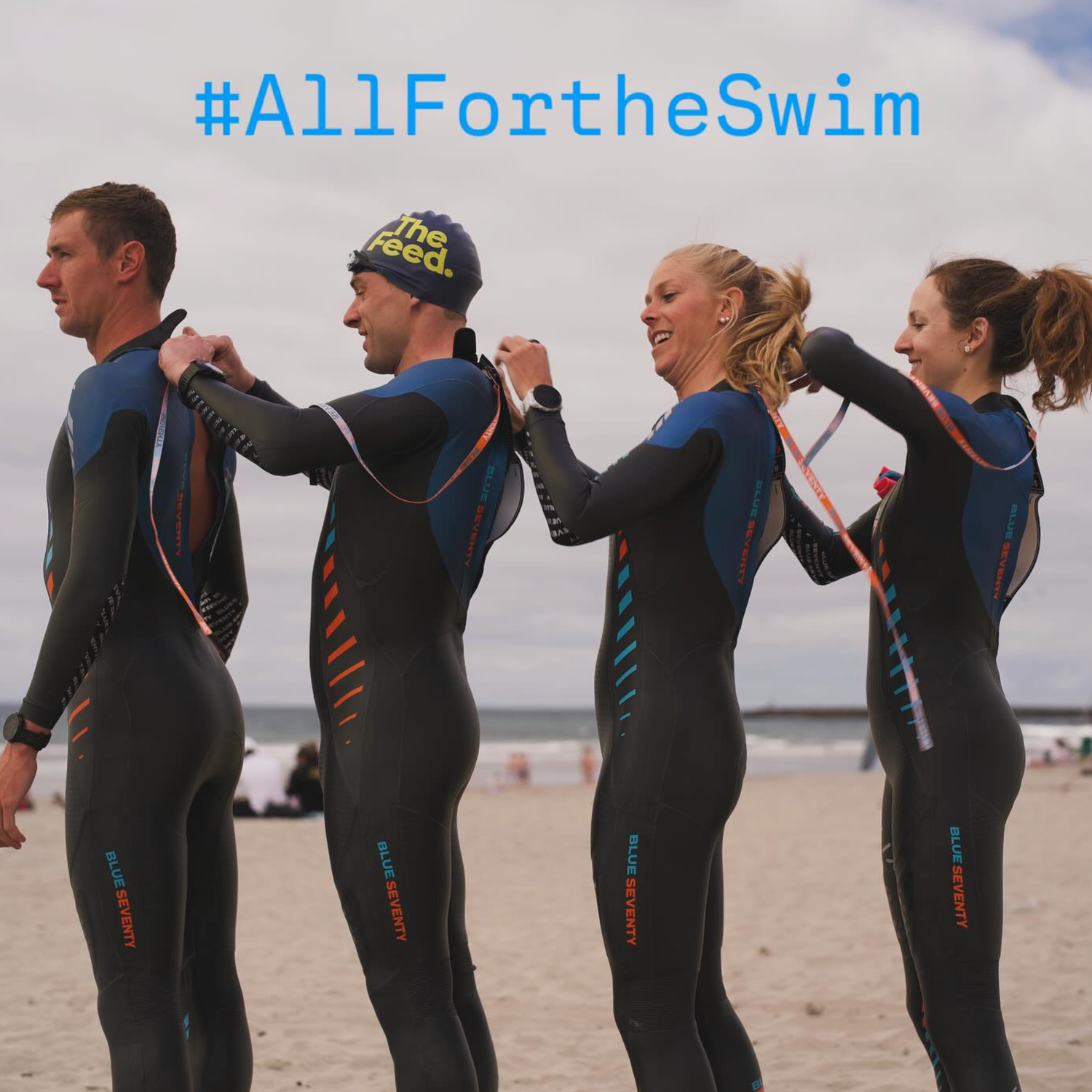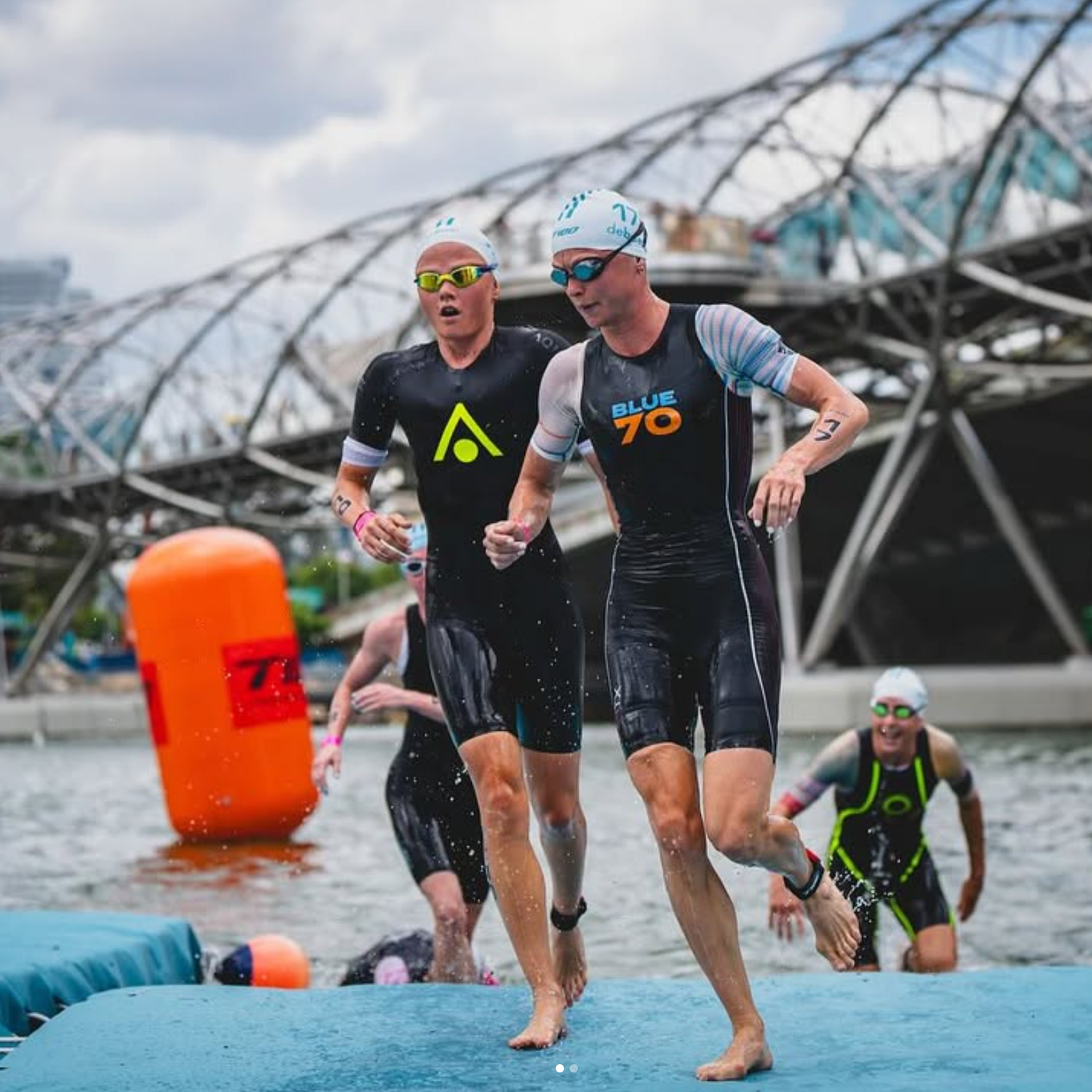



A wetsuit that matches your height and weight on a chart can still fight you across the shoulders. The chart narrows the options. The fitting room tells you whether the pattern actually matches your body. That difference matters now more than it did when triathlon wetsuits first appeared in the early 1990s. blueseventy has built swim-specific wetsuits since 1993, and the current line includes different neoprene cell grades, targeted buoyancy panels, a thermal suit, and a women's specific fit system. A store try-on is the quickest way to judge those choices before you spend.
Size charts start the process
Most swimmers arrive at a dealer with a size already in mind. That is useful. Height and weight charts are the best first pass. They narrow the range and save you from pulling on three sizes that were never in contention. But two swimmers with identical height and weight can have different shoulder width, hip shape, and torso length. A wetsuit pattern has to accommodate all three at once. Charts do not capture that. The fitting room does.
Snug on dry land is expected
A triathlon wetsuit should feel snug when you put it on in a store. It will feel less tight once a thin layer of water sits between your skin and the suit and the neoprene softens. If the suit feels loose in the fitting room, it will feel looser in the water. The right dry-land feel is close, with no chest constriction, and no gaps at the chest or lower back.
blueseventy wetsuits use Yamamoto neoprene in 38, 39, and 40 cell grades. Higher cell numbers mean more flexibility. That flexibility matters most in the shoulders and arms, where freestyle asks for repeated overhead reach.
Shoulder mobility first
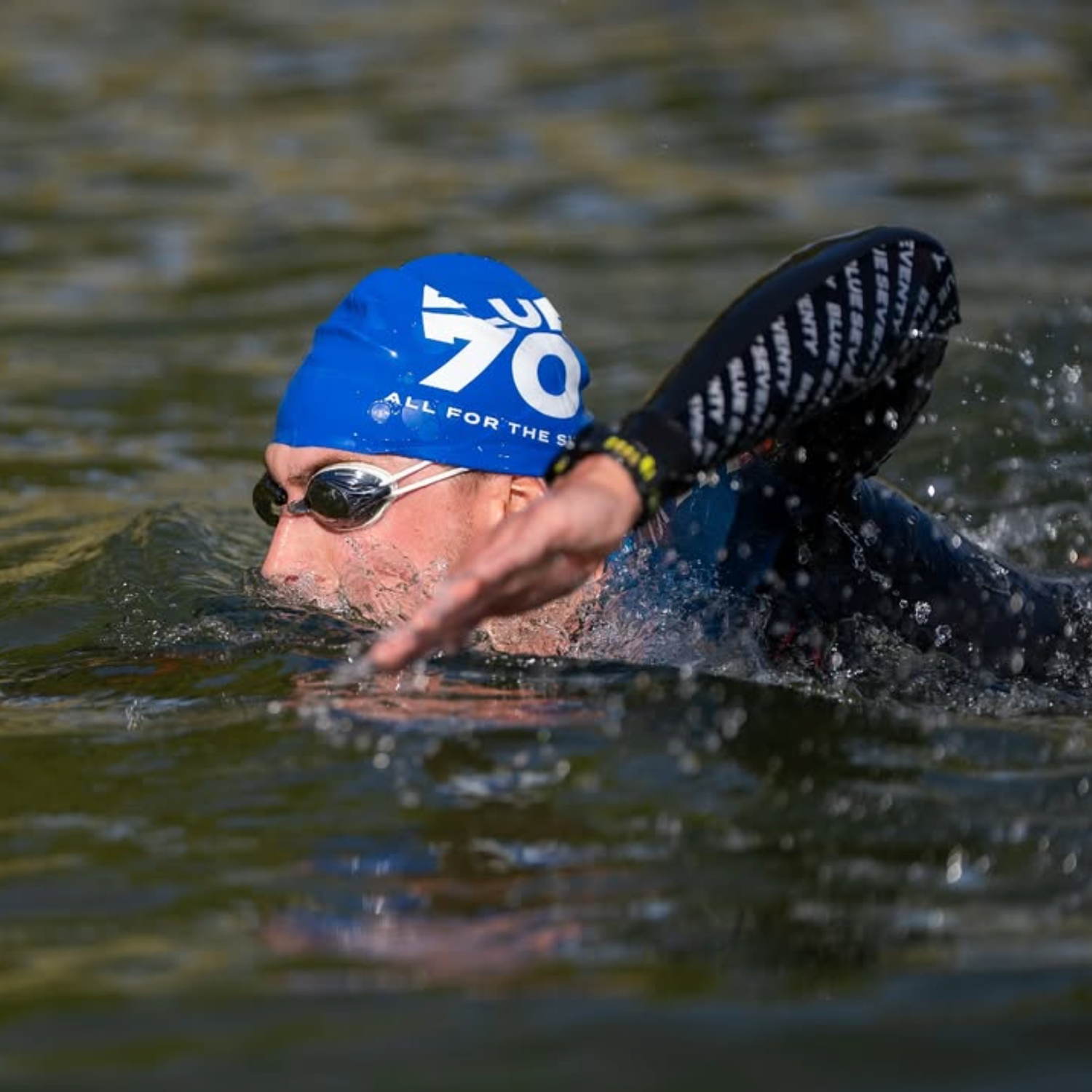
Freestyle depends on shoulder extension and rotation. During a try-on, raise both arms so your biceps are near your ears. If the suit pulls your shoulders down, digs into the neck, or forces you to hunch, the size or model is wrong for your build. The right fit allows full range without a large opening at the chest.
Cross one arm over the body and reach toward the opposite shoulder blade. This mimics the recovery phase of a stroke and exposes tightness that simple arm circles miss. Bend forward at the waist as you would in the water. If the lower back bunches, the torso may be too long or the suit may not yet be pulled high enough. Fix the pull first, then reassess the bend.
The 15-minute fitting sequence
Use a mirror and a slow sequence. The order matters because a suit that sits too low at the hips steals room from the shoulders.
- Pull the legs up first and settle the suit high in the crotch.
- Work the torso up in small gathers rather than one hard pull.
- Put each arm in and settle the shoulder one side at a time.
- Do not zip until the suit sits high under the armpits. If you zip too early, you trap extra neoprene at the hips and lose shoulder room.
- Check the wrists and ankles. They should sit close to the skin without cutting in. A gentle seal is enough.
- Take a full breath. If you cannot, the chest or neck is too restrictive.
- Do a shallow squat. The legs should allow you to rise without the suit pulling down at the shoulders.
Model differences you can feel
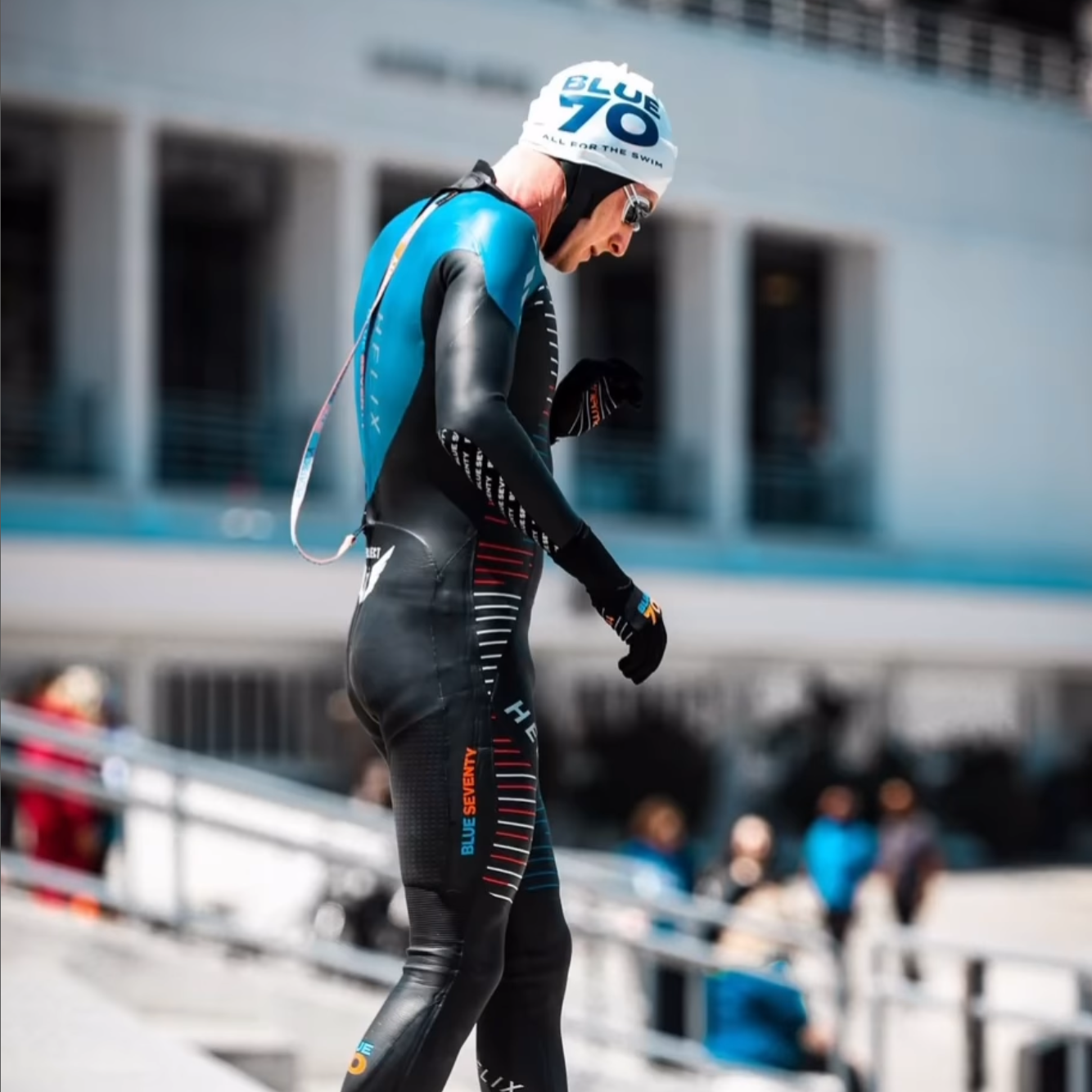
At a dealer, try two suits in the same size and compare what you feel. The Helix is the race-day flagship at $995, with thin, flexible neoprene in the arms and shoulders, a permeable forearm catch panel, and LIFT buoyancy panels. It is not built for heavy daily training. The thin material wears faster with frequent use. The Reaction at $680 uses a higher-grade neoprene than the Fusion and suits swimmers who train once a week or more and want durability with performance. The Fusion at $420 is the mid-range option and received a lower neckline in the 2021 redesign. The Sprint at $325 is the entry point.
If the store has a Fusion and a Reaction, put both on. The $260 price difference is concrete, but the shoulder stretch and chest pressure usually make the decision clearer than the spec sheet does.
Thermal suits in a warm room
The Thermal Reaction at $785 is fully lined with Zirconium jersey, a synthetic wool that adds insulation in cold water. A warm fitting room will not show you that. Any full suit will feel hot and sticky in a heated showroom. That is not a fit defect. Judge the thermal suit on mobility, neck seal, and zipper entry. Save the warmth question for water below about 56 to 58 degrees Fahrenheit, where a purpose-built thermal suit becomes worth the extra material. Above about 70 to 72 degrees, a full suit can feel too warm over longer swims. Those ranges are general guidance, not race-legality cutoffs.
Femme Fit in the fitting room
Femme Fit is a separate pattern engineered for women. It changes the bust, torso, wrists, and ankles. It lowers the neckline to reduce chafing and extends the zipper for easier entry and room through the hips. By 2014, blueseventy had expanded Femme Fit to 15 women's sizing options. If a generic size chart has forced you into a smaller chest measurement with too little hip room, a store try-on is the clearest way to check the actual pattern break. Pay attention to where the zipper stops at the lower back and whether the neck sits flat when you look forward.
Handle the suit with the pads of your fingers
Before you touch the neoprene, do two things:
- Remove rings, bracelets, and watches.
- Use the pads of your fingers, never your nails.
Fingernail punctures are one of the most common ways swimmers damage a new wetsuit, and they are not covered under the one-year manufacturing warranty. Pinch small sections between your thumb and fingers and pull. Do not hook the neoprene with your fingertips. This habit protects the suit during the try-on and later on every race morning.
From store to water
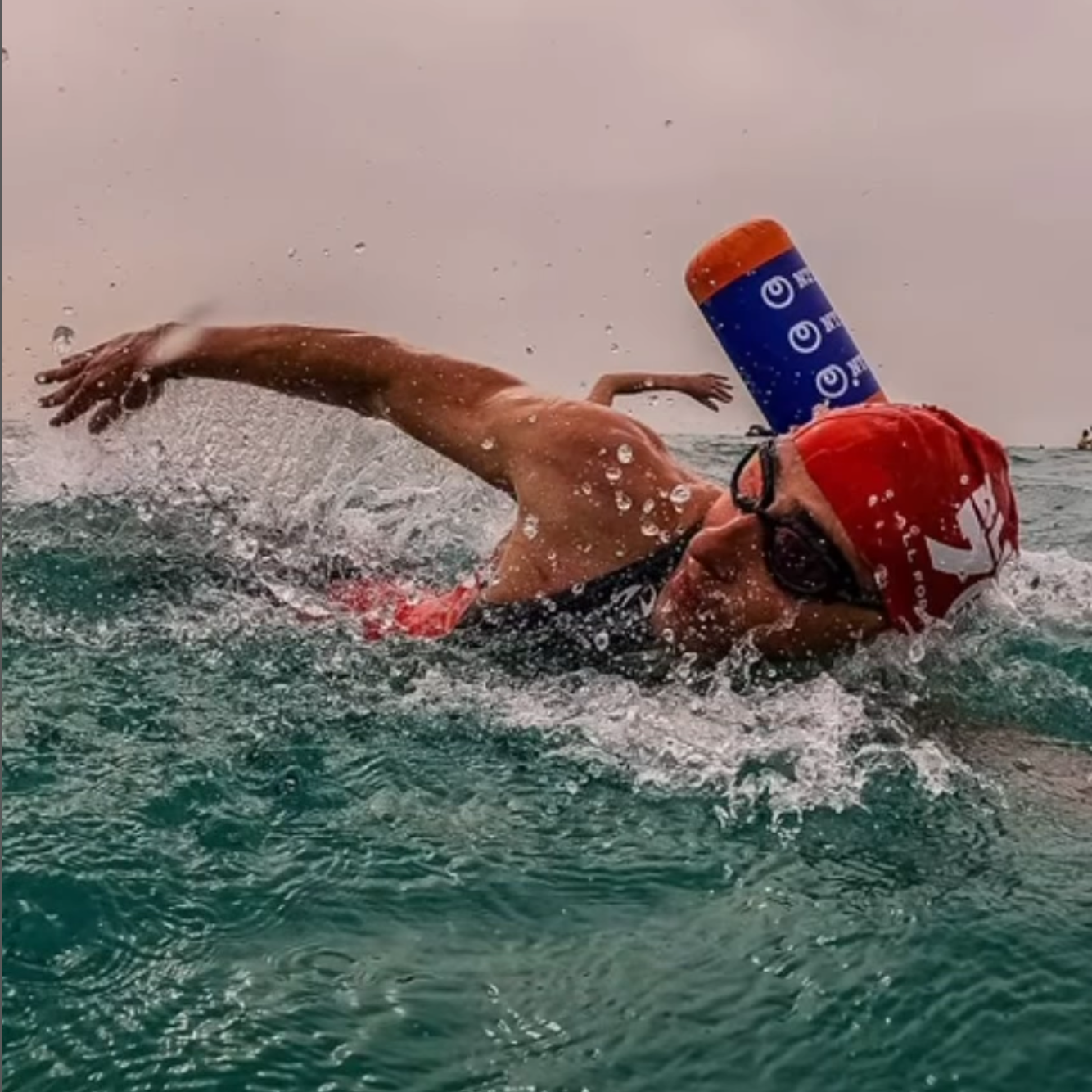
After the store, the best evaluation is water. The suit will feel different when you swim. Snug on land becomes more comfortable in the water. blueseventy encourages a test swim. If you buy through the US site, you can swim in the suit and still return it within 30 days from the ship date, provided it is clean, dry, unmodified, and has the tags and accessories. That removes the pressure to decide everything in the fitting room. Use the store try-on to narrow the choice to one or two suits, then take the final candidate for a swim.
Find a dealer near you. Go in with your size chart number, but let the mirror, the overhead reach, and the forward bend guide the decision. Then take the suit for a swim before you commit. All for the swim.