


Most swimmers walk into a wetsuit store wanting to leave with the right size. That's a good start, but it's only half the measurement. A dry-land fitting tells you whether a suit matches your height and weight. It can't tell you how that suit will move once you're horizontal and pressing water behind you.
Blueseventy's fit guidance is direct. A properly sized triathlon wetsuit feels snug on dry land and more comfortable in the water. If the fitting room is your only test, you're deciding on half the evidence.
This guide walks you through a repeatable process: what to do before you drive, what to check in the fitting room, and how to finish the job with a controlled swim.
Dry Land Is Only the First Data Point
A wetsuit fits differently on land than in water because the suit lets a thin layer of water in. Your body warms that layer, and the neoprene softens when wet. Without that layer, the suit grabs your skin and feels tighter than it will during a swim.
That's why a suit that feels comfortable in the store can be too loose in the lake. Neoprene relaxes when wet. Gaps that were invisible under store lighting open up as you move. The opposite happens too: a suit that feels impossible to zip on land can settle into a functional fit once you're swimming and the shoulder panels stretch under load.
Swim-specific suits use a different panel layout than surf or dive suits. Blueseventy wetsuits use Yamamoto neoprene in 38, 39, and 40 cell. Higher cell numbers mean more flexibility. That matters in the shoulders, where a full overhead reach is the default movement.
Blueseventy's fitting story starts in 1993, when the company began as Direct Innovations and developed one of the first triathlon wetsuits. In 2014, Femme Fit expanded women's sizing to 15 options. In 2021, the Fusion received a lower-sitting neckline. Each change made a store visit more useful because the suit became less of a generic neoprene tube and more of a body-specific tool.
Choose a Model Before You Choose a Size
Walking into a store and asking for a wetsuit is like walking into a running store and asking for shoes. You need the model family first.
Blueseventy's swim-specific line splits by training frequency, water temperature, and durability. Current US pricing puts the entry and mid-range options within reach of most first-timers.
- Sprint ($325): first-timers and shorter races where price matters most.
- Fusion ($420): swimmers who train frequently but keep sessions shorter.
- Reaction ($680): frequent, longer open-water swims where durability matters.
- Reaction Sleeveless ($395): warm water and easier entry.
- Thermal Reaction ($785): cold water, fully lined with Zirconium jersey for added thermal protection.
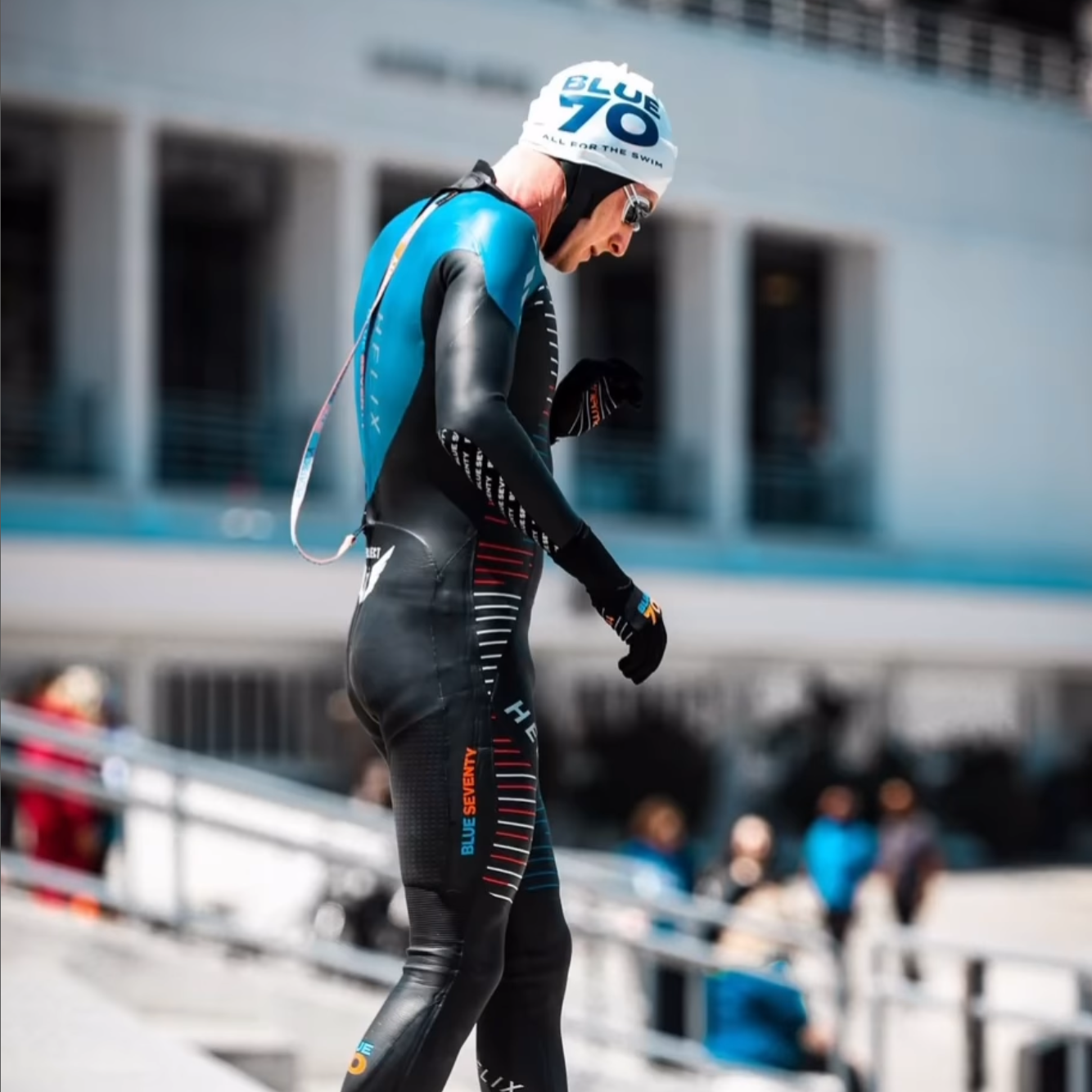
- Helix ($995): race day, with thin flexible neoprene in the arms and a permeable catch panel. Not recommended for heavy training use because that thin neoprene breaks down more quickly.
Ask the store to pull your model family before you start trying sizes. If they don't stock it, ask them to order it or check another blueseventy dealer.
Five Checks to Run in the Fitting Room
Once the model is right, treat the store visit as a mobility test. Don't rush through these checks.
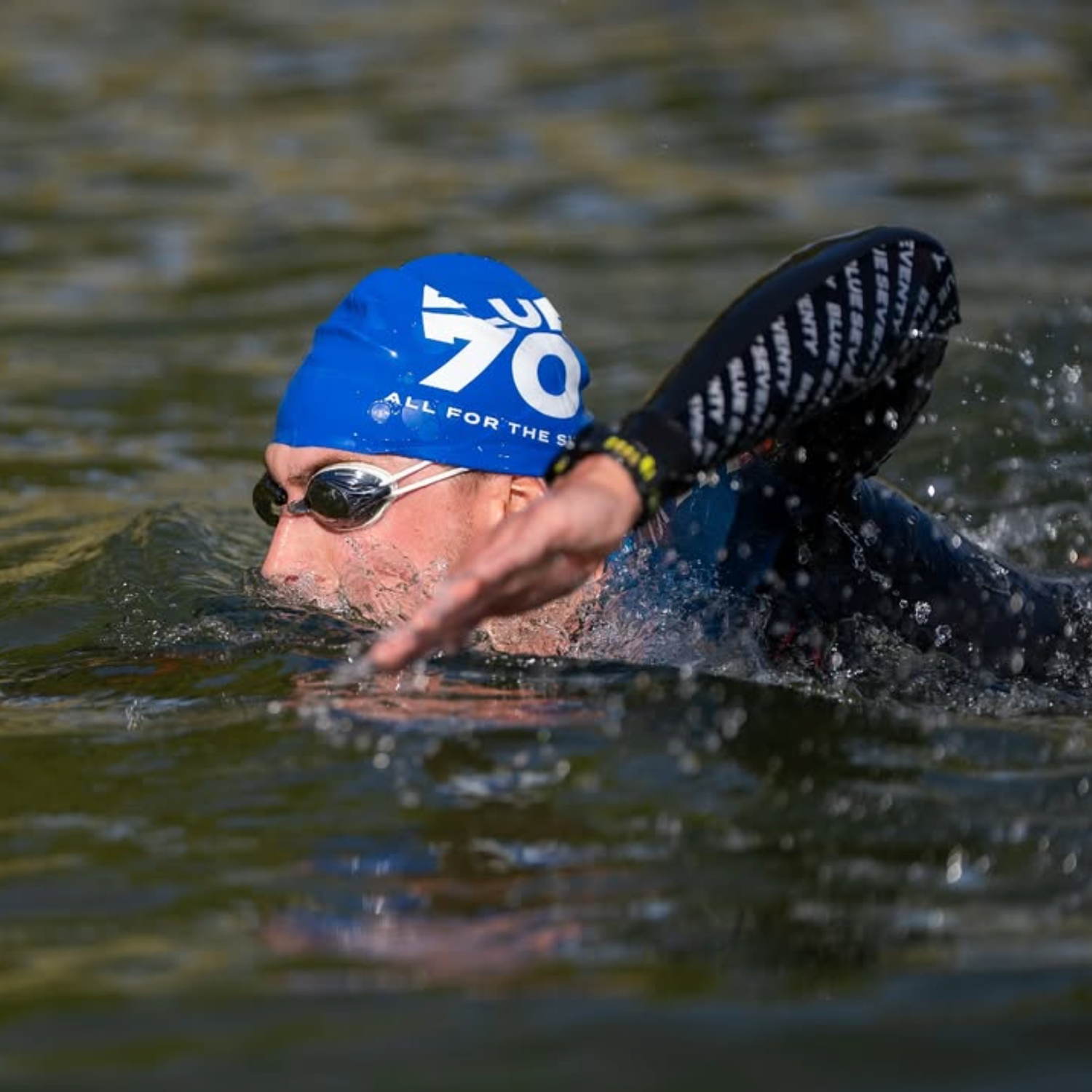
- Shoulder reach. Put both arms overhead into a streamline. Rotate side to side and reach across your body. Look for pinching under the arms or restriction across the upper back. A swim-specific suit should allow the starting position of a freestyle stroke without a visible struggle.
- Neck seal. Run two fingers under the neckline. It should sit flush, not gap. The Fusion's 2021 neckline sits lower to reduce pressure while keeping the seal. Sharp pressure on the windpipe means the suit is pulling up too high or the torso is too short.
- Torso length. Look in a mirror. Deep horizontal folds across the lower back point to too much material. Small vertical folds at the stomach are normal when you bend forward. You want the suit to follow your spine, not bunch into a roll above your hips.
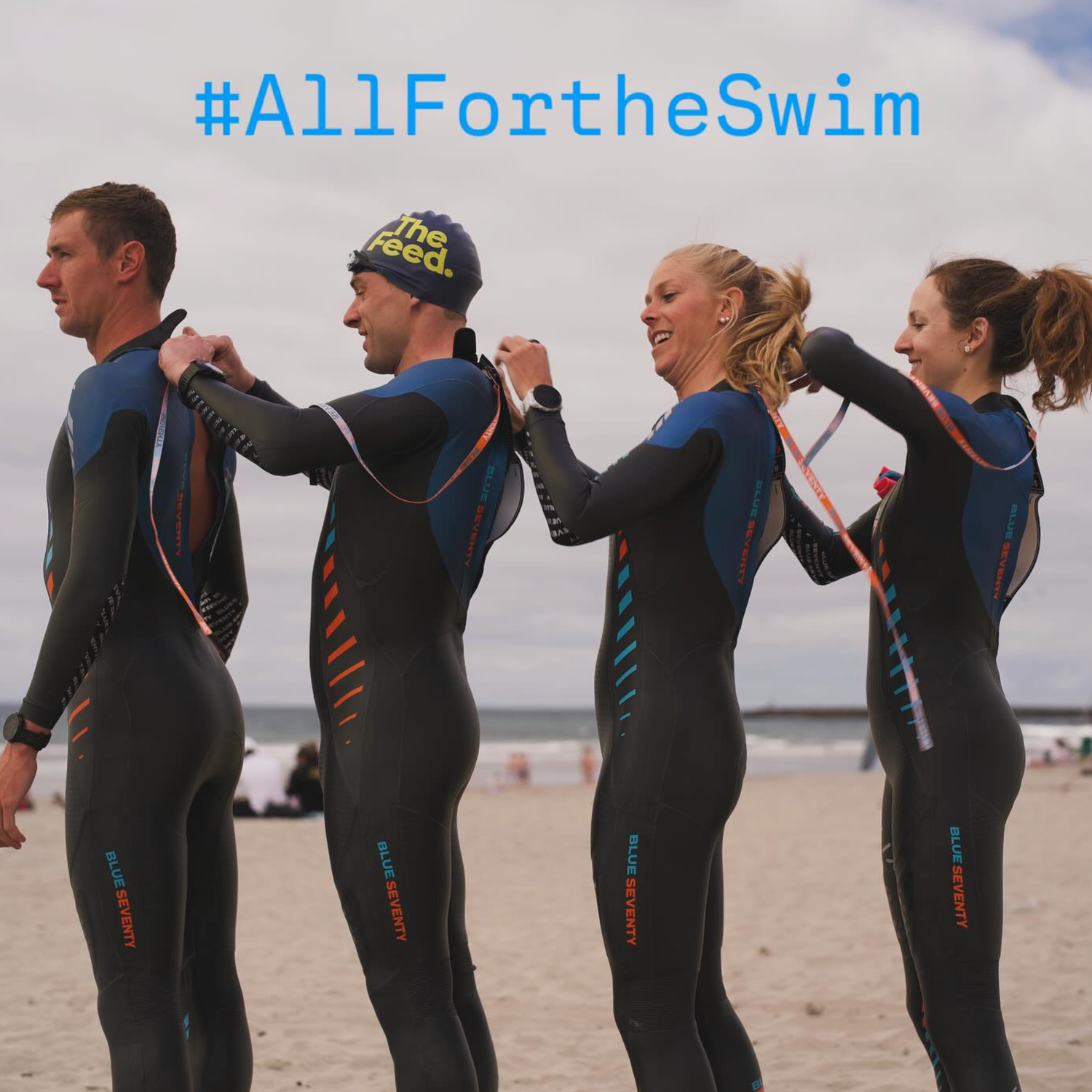
- Zipper and chest. Have a staff member close the zipper. Bunching at the lats or a zipper that pulls away from the back is a fit problem. Take a full breath after the zipper closes. Your ribs should expand without a hot band of pressure across the sternum.
- Ankles and wrists. The seals should feel snug. After two minutes, they shouldn't leave deep red rings. They'll ease in the water, but they shouldn't cut off circulation on land.
How fast you can zip the suit on your own matters less than range of motion and seal integrity.
Femme Fit Changes What You Should Feel
Women's wetsuit fitting used to be an afterthought. A scaled-down men's pattern can put the right panel in the wrong place on a swimmer with different hip and bust geometry. Blueseventy addressed this with Femme Fit. It refines the bust, torso, wrists, and ankles. The neckline sits lower. The zipper is longer, which helps entry and eases pressure at the hips.
In the fitting room, check the same five mobility points. Then add one more: the hip panel. When you lift your knee toward your chest, the suit shouldn't twist hard at the hips. The lower neckline should reduce chafing at the front of the throat during sighting. If you've spent years pulling a unisex suit out of your shoulders and accepting hip tightness, don't carry that trade into the next purchase.
Ask for a women's-specific model in your size range. Don't accept a suit that fits the chest but leaves the hips compressed. Blueseventy built the extended zipper and refined pattern to fix that.
The Test Swim That Completes the Fit
A store visit gets you closer. It doesn't finish the job. Blueseventy's US policy lets you take a test swim. You can swim in the wetsuit and still return or exchange it if the suit comes back clean, dry, unmodified, and with tags and accessories.
Take the suit to a pool before race morning. A controlled session separates fit problems from open-water nerves. Swim for at least ten minutes before you judge. Check shoulder freedom and neckline comfort when sighting. Then check leg position: your legs should ride high without you kicking hard.
The physics is straightforward. A wetsuit adds buoyancy at the hips and legs, which lifts the lower body and reduces drag. That's why we say buoyancy equals speed in the water. If the suit fits correctly, you'll feel that lift. If you have to arch your back to keep your legs up, check the size or the position of the buoyancy panels.
How to Find a Blueseventy Dealer and Prepare for the Visit
The dealer locator on the blueseventy site lists shops that carry the line. Call before you go. Confirm that the shop has your model family in your size range, and ask whether a staff member can help with the zipper and shoulder checks. Bring the suit or tri kit you plan to race in. Give yourself 20 to 30 minutes.
Find a blueseventy dealer near you
A good store fitting leaves you with a suit that passes the five mobility checks and a plan to swim in it before race day. The store is step one. You confirm the fit in the water.