


Ask about wetsuit thickness for 65°F water and most swimmers want a single number. That would make the decision easy, but it would also leave out the part that matters most once you start swimming. At 65°F, the right suit is usually the one that gives you enough thermal protection without costing you body position, shoulder freedom, or rhythm.
That is why this temperature deserves a better conversation than a simple thickness chart. Blue70’s published guidance places the move to a purpose-built thermal suit below about 56 to 58°F. It also notes that above about 70 to 72°F, a full suit can become too warm over longer swims. That puts 65°F in the middle, where most swimmers do best in a full-sleeve swim-specific wetsuit, but the final choice depends on fit, session length, stroke mechanics, and cold tolerance.
If you only remember one idea, remember this: at 65°F, panel placement usually matters more than chasing the thickest overall feel.
Why 65°F is a tricky temperature
Sixty-five degrees is cool enough that you notice it as soon as you get in. Your face feels it. Your hands feel it. The first few minutes can feel sharp if you are not used to open water. But 65°F is not automatically thermal-suit territory for every swimmer. Many triathletes and open-water swimmers settle in well at that temperature once they start moving, especially in a full suit that fits correctly.
That middle-ground status is what makes 65°F interesting. You are not choosing between obvious extremes. You are deciding how much insulation you need while still protecting the quality of your stroke. A suit that feels warm but restricts your shoulders can turn a manageable swim into a hard one. A suit that fits cleanly and lets you move often feels better after ten minutes than a heavier-feeling option that fights your recovery and catch.
Thickness is spread across the suit, not stamped as one answer
Swim-specific wetsuits are built in panels because different parts of your body need different things. Your hips and legs benefit from buoyancy that helps lift you into a better line through the water. Your shoulders and arms need freedom so you can reach, rotate, and hold your catch without fighting the suit on every stroke.
Blue70 wetsuits use Yamamoto 38, 39, and 40 cell neoprene, with higher cell numbers corresponding to greater flexibility. That detail matters at 65°F because warmth is only part of the equation. If the upper body feels restricted, your stroke shortens, your breathing gets tighter, and the swim starts to cost more energy than it should.
A swimmer does not experience a wetsuit as a single thickness number. You experience it as pressure on the chest, tension through the shoulders, lift through the hips, and comfort at the neck. That is why the right choice for 65°F usually comes down to how the suit is built and how it fits, not just how thick it sounds on paper.
Fit changes warmth more than many swimmers expect
A wetsuit is not waterproof, and it is not designed to keep you dry. It lets in a thin layer of water, and your body warms that layer to create insulation. That system works best when the suit is snug and limits water movement inside the suit.
If the fit is off, warmth drops fast. Extra space at the lower back, loose material through the torso, or gaps at the neck, wrists, or ankles allow more water movement. The suit can feel colder in the water even if the neoprene itself seems warm enough. Poor fit also tends to create restriction, especially if the material has not been pulled high enough through the hips and shoulders.
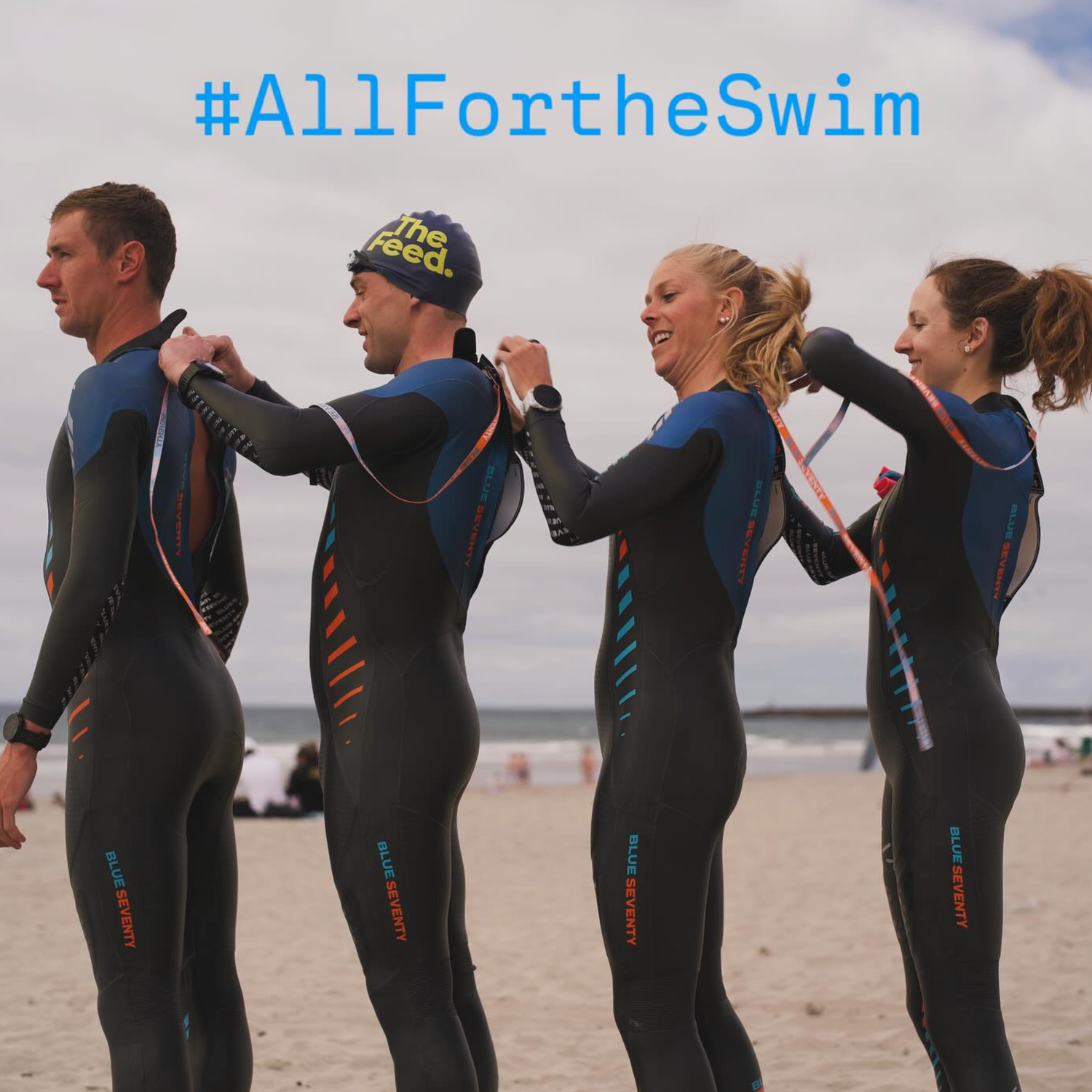
Blue70’s fit guidance is straightforward: a wetsuit should feel snug on land and more comfortable once you are in the water. That point matters at 65°F because many swimmers misread snug as too tight, then size up, lose fit, and end up colder. Others buy the right size but do not put it on correctly, and then blame the suit when shoulder fatigue shows up in the first few hundred meters.
What most swimmers should wear in 65°F water
For most triathletes and open-water swimmers, a full-sleeve swim-specific wetsuit is the best starting point for 65°F water. That covers the majority of race-day swims, training sessions, and confidence-building open-water outings in this temperature range.
From there, the better question is which type of full suit matches the way you swim.
For race-focused swimmers
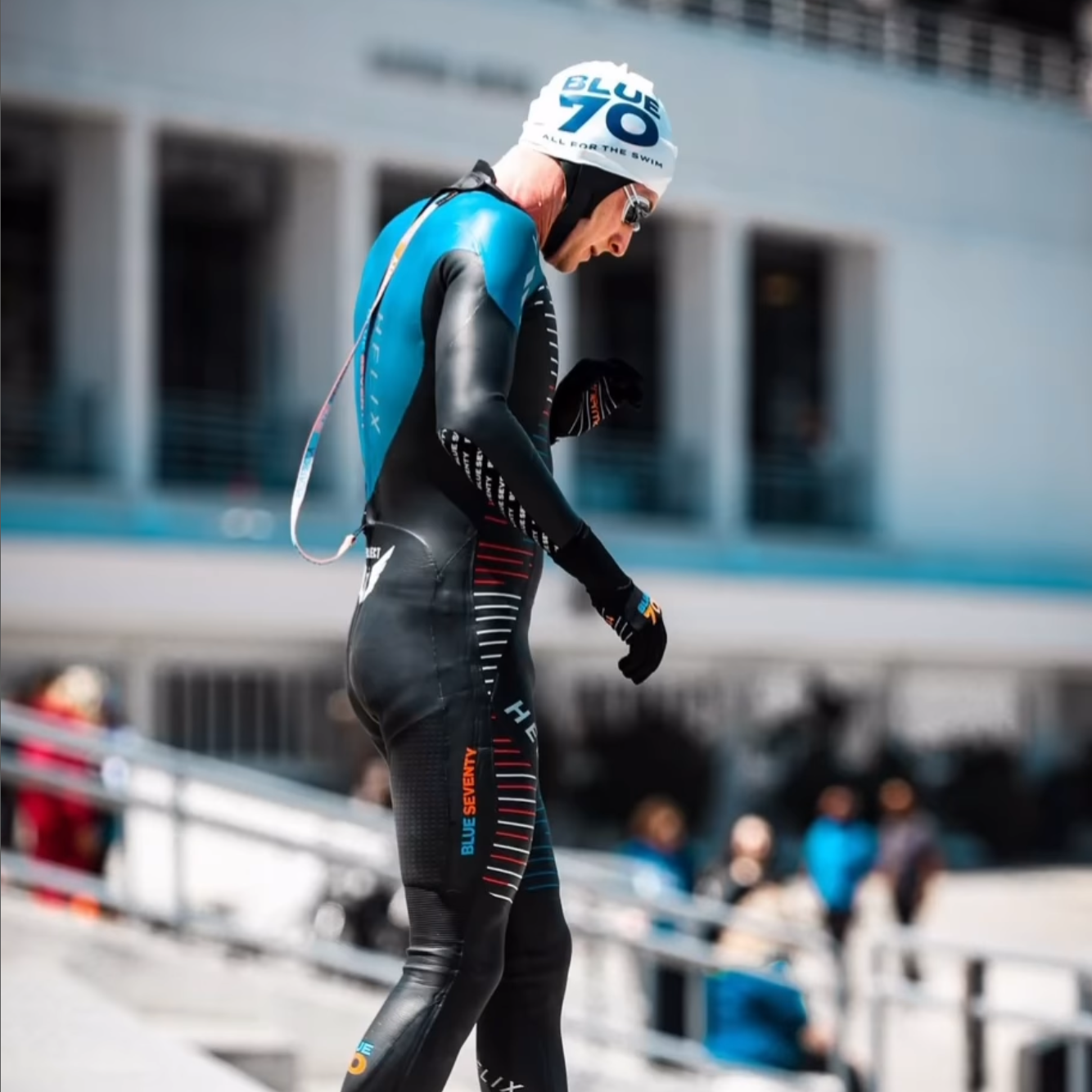
The Helix is Blue70’s flagship race suit. It uses very thin, flexible neoprene in the arms and shoulders, includes a permeable catch panel to preserve feel for the water, and has LIFT buoyancy panels added in 2018. In 65°F water, that design suits athletes who want maximum freedom through the upper body and who already know they can manage this temperature without extra thermal lining.
For regular open-water training
The Reaction is often the smartest pick for swimmers who are in open water often, especially for longer sessions. Blue70 recommends it for frequent, longer swims. That matters because repeated training use puts a different demand on a suit than race-only use. You still want performance, but you also want a build that supports week-after-week swimming.
For newer swimmers and practical all-around use
The Fusion gives many swimmers a strong balance of comfort, performance, and value. Blue70 redesigned the Fusion in 2021 with a lower-sitting neckline for comfort while maintaining a watertight seal. At 65°F, that kind of comfort matters. If your neck feels right and the suit settles quickly, the whole swim gets easier.
For swimmers who run cold
The Thermal Reaction is Blue70’s cold-water suit, fully lined with Zirconium jersey for added warmth. Blue70’s own guidance puts the move to a thermal suit below about 56 to 58°F, so 65°F does not usually require it. Still, some swimmers know they run cold, plan longer sessions, or want more thermal protection than a standard full suit provides. Individual tolerance matters.
The stroke-mechanics test matters more than the parking-lot test
A lot of wetsuit decisions get made before anyone starts swimming. The suit goes on in the parking lot, it feels secure, and that first impression becomes the verdict. That is not enough.
The better test happens after a few hundred meters. A good 65°F wetsuit choice lets your breathing settle, your body ride higher, and your stroke open up once the first cold contact passes. A poor choice keeps the shoulders loaded and the upper body tense. In that case, swimmers often say the water felt colder than expected, when the real problem was that the suit never let them relax into their normal rhythm.
That is one reason experienced swimmers often care so much about shoulder mobility. If the shoulders stay free, the whole swim usually goes better.
How to choose for your real swim
Do not choose a suit for an imaginary swimmer. Choose for the swim you actually do.
- Look at session length. A short race effort in 65°F water creates a different demand than a long aerobic open-water session.
- Be honest about cold tolerance. Some swimmers settle quickly in cool water. Others stay tense longer and lose comfort sooner.
- Match the suit to your stroke. Stronger swimmers usually notice shoulder restriction first. Newer swimmers often notice buoyancy first.
- Prioritize fit. A full suit that fits cleanly will usually outperform a warmer-feeling suit that gaps or pulls in the wrong places.
- Account for the whole day. Wind, air temperature, and time waiting before the start affect how the swim feels, even though they do not change the water temperature itself.
Common mistakes at 65°F
- Buying for warmth alone. A suit that feels warmer on shore can still swim worse once your stroke starts.
- Ignoring donning technique. If the suit is low through the hips and torso, the shoulders will work harder than they should.
- Going sleeveless too soon. Sleeveless suits have a place, but most swimmers will be better served by full sleeves at 65°F unless they already know they stay comfortable without arm coverage.
- Treating every 65°F swim the same. Race pace, chop, swim duration, and personal tolerance all change the answer.
The practical answer
For 65°F water, most swimmers should start with a standard full-sleeve swim-specific wetsuit. In most cases, you do not need to jump straight to a thermal suit. Blue70’s published temperature guidance supports that approach. A thermal model becomes more relevant once water drops below about 56 to 58°F, while full suits can become too warm over longer swims once water gets above about 70 to 72°F.
Inside that range, the smartest choice is the one that balances thermal protection, buoyancy, and freedom from restriction. That usually points toward a suit with well-placed buoyancy, flexible shoulders, and a fit that seals cleanly without limiting movement.
If you want to make the decision with more confidence, use Blue70’s size charts, review the fit guide, or Take a Test Swim before your next open-water block. A properly fitted suit usually answers the 65°F question better than a bigger thickness number ever will.