


Most swimmers pick cold water gloves by reading the millimeter number. Five sounds warmer than three, so five wins. That logic works if you plan to stand still. For swimming, warmth depends on a different detail: whether the cuff seals.
Wetsuit gloves work the same way a wetsuit works. They let a thin layer of water inside. Your body heats that layer, and the neoprene slows heat loss to the surrounding water. Five millimeters of neoprene provides more insulation than thinner gloves in still water. The tradeoff is bulk. Bulk reduces finger dexterity and dampens feel for the water. That matters because your hands help you hold water through the catch. A stiff, bulky glove can flatten your stroke and add shoulder strain over longer swims. For triathletes, the same bulk makes goggles, zippers, and transition work harder. Choose 5mm for the conditions and the fit, not because the number sounds warm.
Why Fingers Get Cold Before the Rest of You
Fingers cool quickly because they have a lot of surface area relative to their mass. When open water drops below about 56°F, a thermal full-sleeve wetsuit adds meaningful warmth, and gloves often enter the conversation. In cold water, your body narrows blood vessels in the fingers to protect the core. Less warm blood reaches the hands. A well-fitted glove slows heat loss from the skin. A glove that fits too tightly through the palm, wrist, or finger gussets restricts the circulation that cold has already reduced. That can leave your fingers colder in a thicker glove.
Thermal protection also depends on exposure time and the swimmer. Two people in the same water will not respond the same way. A 5mm glove that works for a 20-minute lake swim may not hold up for a 90-minute coastal swim. Use thickness as a starting point.
Fit Failures That Undo a 5mm Glove
The most common fit errors are too-tight fingertips, loose wrist openings, and wrinkled palms. A glove that is too short in the fingers forces the hand to curl slightly. A glove that is too long leaves extra neoprene at the fingertips. That extra folds under pressure and makes gripping awkward. A wrinkled palm means the neoprene is bunching. Bunched neoprene insulates unevenly.
Women often run into this with unisex sizing. A hand with a narrower palm and shorter fingers can be tight across the knuckles and loose at the wrist in a glove cut for a broader hand. A smaller size often makes the knuckle tightness worse. Look for a fit that follows the hand without squeezing it. You should be able to make a light fist and open the fingers fully without the cuff pulling down or the seams digging in.
The Wrist Seal Is Where Warmth Is Won or Lost
Hands move through the water on every stroke. Each time the wrist flexes, water can slip in or out. A 5mm glove with a short, loose cuff acts like a bucket with a hole. You start with warm water around your fingers. Each stroke pushes a little out and pulls a little cold water in. Your body reheats it, then loses it again.
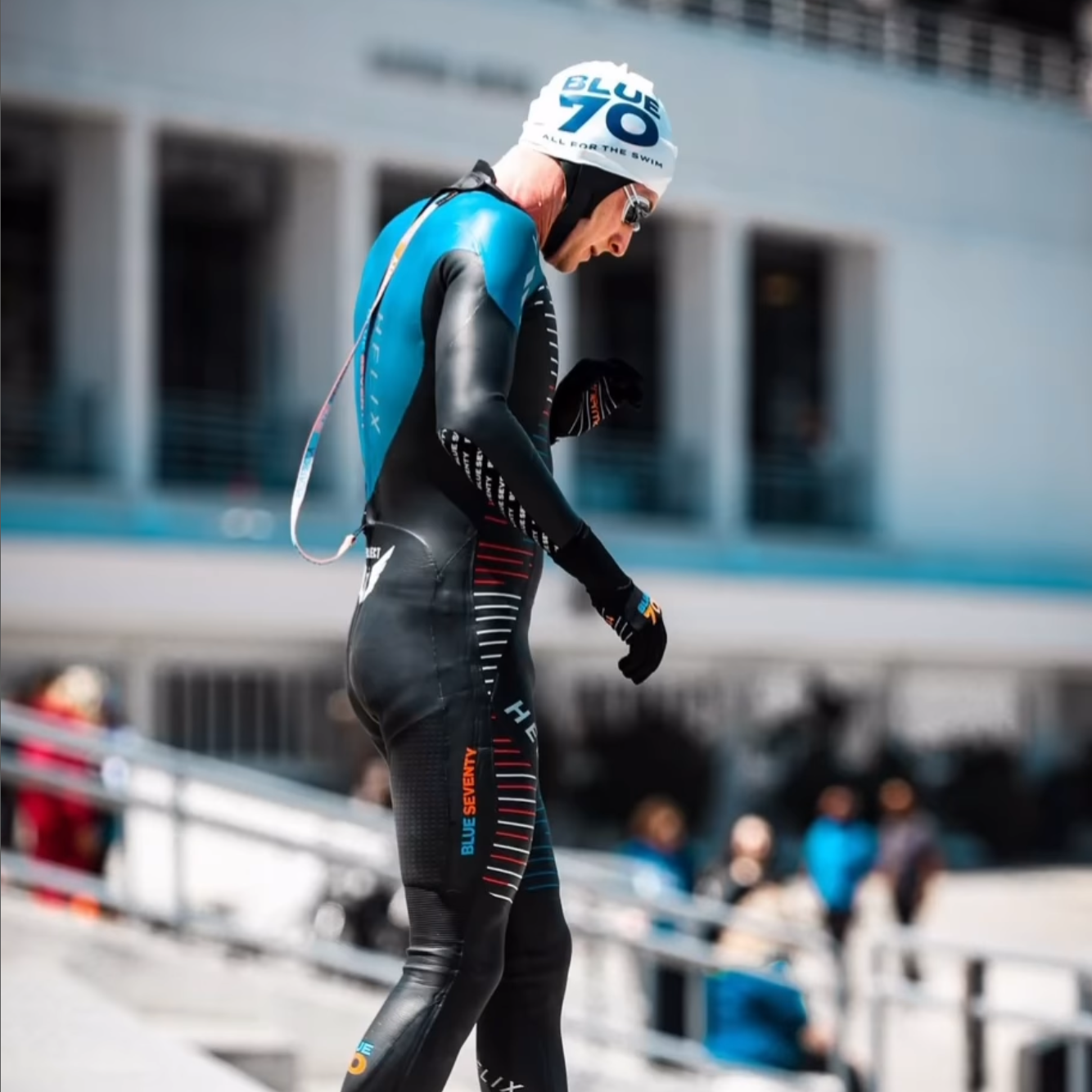
A long cuff that overlaps your wetsuit sleeve by several inches reduces that flushing. Look for a smooth rubberized edge at the wrist. Pull the glove over the wetsuit sleeve if the cuff is wide enough, or tuck it under if the sleeve opening is tight. The goal is an overlap without a gap. Test this by moving your wrist through a full swim stroke before entering the water. If you feel the cuff sliding or hear air bridge, the seal needs adjustment.
Gloves work as part of a system. A 5mm glove pairs best with a full-sleeve thermal wetsuit because the overlap creates a longer path for water to travel. If you wear a sleeveless suit, the glove cuff has nothing to seal against. In that case, a longer glove or a separate arm seal often adds more warmth than another millimeter of neoprene.
How to Test a 5mm Glove Before Committing
A glove can feel warm in the shop and fail in the water. Test it under real conditions.
- Put the glove on without using fingernails. Roll the cuff back, insert your fingers, then unroll it.
- Swim for at least ten minutes before judging. Fit problems show up after the initial cold shock fades.
- Make a full fist and open it ten times. If the glove binds at the knuckles or leaves red marks, it's too tight.
- Check whether you can adjust goggles, unzip a wetsuit, or pick up a small object. You'll need those skills during the swim or in transition.
Care Habits That Extend Thermal Glove Life
Thicker neoprene is not tougher. Fingernail punctures, forced pulls, and hot water shorten its life. Rinse gloves in cool fresh water after every swim. Turn them inside out if the lining is smooth, then dry away from direct sun and heat. Never wring them. When dry, store flat or draped, not folded under a heavy bag.
To put them on, roll the cuff rather than pulling at the wrist. That detail prevents the two most common glove failures: torn seams and split cuffs.
Pairing Gloves with the Rest of Your Cold Water Kit
Five millimeter gloves work as part of a system. They pair with a thermal full-sleeve wetsuit, a swim cap, and a cold-water safety plan. At blueseventy, the Thermal Reaction wetsuit uses a Zirconium jersey lining designed for cold water swims. The same priority applies to thermal accessories: fit and seal first, thickness second.
If you're adding 5mm gloves, you're likely swimming in water cool enough that gradual acclimatization and a swim buddy matter as much as your gear.
Safety Reminder
Cold water swimming carries real risk. Gloves add thermal protection. They do not make cold exposure safe. Swim with a buddy, acclimatize slowly, and get out if you lose coordination or stop shivering.
Browse the thermal accessories collection and take what you learn into your next cold water swim.