


Winter wetsuit shopping usually starts with a numbers debate: 3/2 or 5/4. For swimmers and triathletes, that question sounds tidy but misses the point. Thickness matters, but it does not tell you how a suit will feel after 30 minutes in cold water, or what it will do to your stroke once your shoulders have been turning over for a few hundred repetitions.
That is why swimmers need a different lens. A winter wetsuit is not just an insulation tool. It is part of your movement system. If it adds warmth but fights your recovery, shortens your extension, or dulls your catch, the session gets harder in ways that many athletes mistakenly blame on fitness.
The better question is simpler and more useful: how much neoprene can you wear before it starts to change the way you swim?
Why thickness labels only tell part of the story
A 3/2 or 5/4 label refers to neoprene thickness in millimeters across different parts of the suit. In broad terms, a 5/4 uses thicker neoprene than a 3/2. Thicker neoprene usually adds buoyancy and insulation. It also tends to resist movement more, especially through the upper body.
That trade-off matters more in swimming than many athletes realize. Open-water swimmers do not spend time standing still. They rotate through the torso, recover the arm overhead, enter the water cleanly, reach forward, set the catch, and repeat that sequence for the entire session. A suit that interferes with those movements changes the swim, even if it feels warmer on paper.
For that reason, swim-specific design matters more than the thickness number alone. Shoulder patterning, panel placement, neoprene grade, lining, and neckline construction all affect how a suit behaves in motion. blueseventy uses Yamamoto neoprene in 38, 39, and 40 cell across its wetsuit range, with higher cell numbers corresponding to more flexibility. That detail matters in winter because preserving mobility is part of preserving technique.
Winter swimming exposes bad mechanics quickly
Cold water changes the body before fatigue from training ever shows up. Breathing often gets choppy in the first few minutes. Muscles can feel stiff. Timing can slip. Hand entry and catch precision tend to get worse before they improve.
If the wetsuit also restricts movement, those small problems compound. The swimmer starts adjusting around the suit rather than swimming through the water. That is where winter sessions can go sideways.
Swimmers in restrictive suits often show the same pattern:
- Front-end extension gets shorter.
- Arm recovery starts to feel heavier.
- The catch gets rushed instead of set patiently.
- Stroke rate climbs to compensate for lost efficiency.
- Shoulder fatigue arrives earlier than expected.
That sequence matters. Winter swimming already raises the energy cost of good technique. If the suit adds more work to every stroke, added insulation does not automatically make it the better choice.
Why a 5/4 can be too much suit for many swimmers
A thicker suit can sound like the safe winter answer. Many swimmers picture the walk to the water, the first cold contact, and the wind at the shoreline, then buy for that moment. The swim itself is a different test.
In the water, a 5/4 can create four common problems for swimmers:
Shoulder resistance
When thick neoprene resists overhead motion, the arm has to work harder on every recovery. The cost may feel small at first. It rarely stays small over the full session.
Shortened extension
If the chest and shoulders do not move freely, swimmers often stop reaching fully in front of the body. That shortens the body line and can reduce efficiency through the water.
Disrupted catch timing
Restriction through the upper body can pull swimmers out of rhythm at the front of the stroke. Instead of setting the hand and forearm cleanly, they begin the pull too soon and lose pressure on the water.
Fatigue that feels like a fitness problem
This is the one that fools people. A swimmer gets out of the water thinking they are out of shape, when the bigger issue was that the wetsuit turned every stroke into a small strength exercise.
That does not mean thicker suits never belong in cold water. It means swimmers should judge thickness by its effect on the stroke, not by insulation alone.
Why many swimmers do better in a more flexible suit
A 3/2 profile often works better for swimmers because it gives back something that matters in open water: natural movement. If your recovery stays relaxed, your extension stays long, and your shoulders do not fight the suit, you are more likely to hold your form deep into the session.
That usually shows up in ways swimmers can feel right away:
- Cleaner hand entry.
- Less tension through the shoulders.
- Better reach in front of the body.
- A more natural catch.
- Less form breakdown over time.
The key point is not that a standard 3/2 always solves winter conditions. Water temperature, session length, wind, and personal tolerance all matter. The point is that many swimmers jump too quickly to maximum thickness without asking what that thickness will cost them in movement.
Thermal lining changes the winter equation
This is where swim-specific winter design matters most. If your priority is cold-water swimming, the smart answer is often not a heavier, stiffer suit. It is a suit built for swimmers that adds warmth through lining and construction while protecting range of motion.
blueseventy’s Thermal Reaction takes that approach. It is fully lined with Zirconium jersey for warmth in cold water. That matters because it addresses the winter problem directly without assuming that adding thickness everywhere is the only answer.
blueseventy’s published guidance places an important threshold below about 56 to 58°F. In that range, a purpose-built thermal suit adds meaningful warmth. That is a more useful decision point than treating 3/2 and 5/4 as universal categories for every winter swim.
Buy for the full swim, not the first minute
Many winter buying mistakes happen before the swimmer even gets wet. The decision is based on standing still at the shoreline, not on how the suit behaves once the body settles into rhythm.
A better test is to think about the full session:
- How long will you be in the water?
- How hard will you be swimming?
- How much body heat will you generate once moving?
- Will the suit support your mechanics after 20 minutes, not just after 20 seconds?
A suit can feel reassuring at the start and still become a poor choice once fatigue builds. Swimmers who spend a lot of time in open water learn to judge a wetsuit by what it feels like after the initial cold settles down.
Fit can matter more than thickness
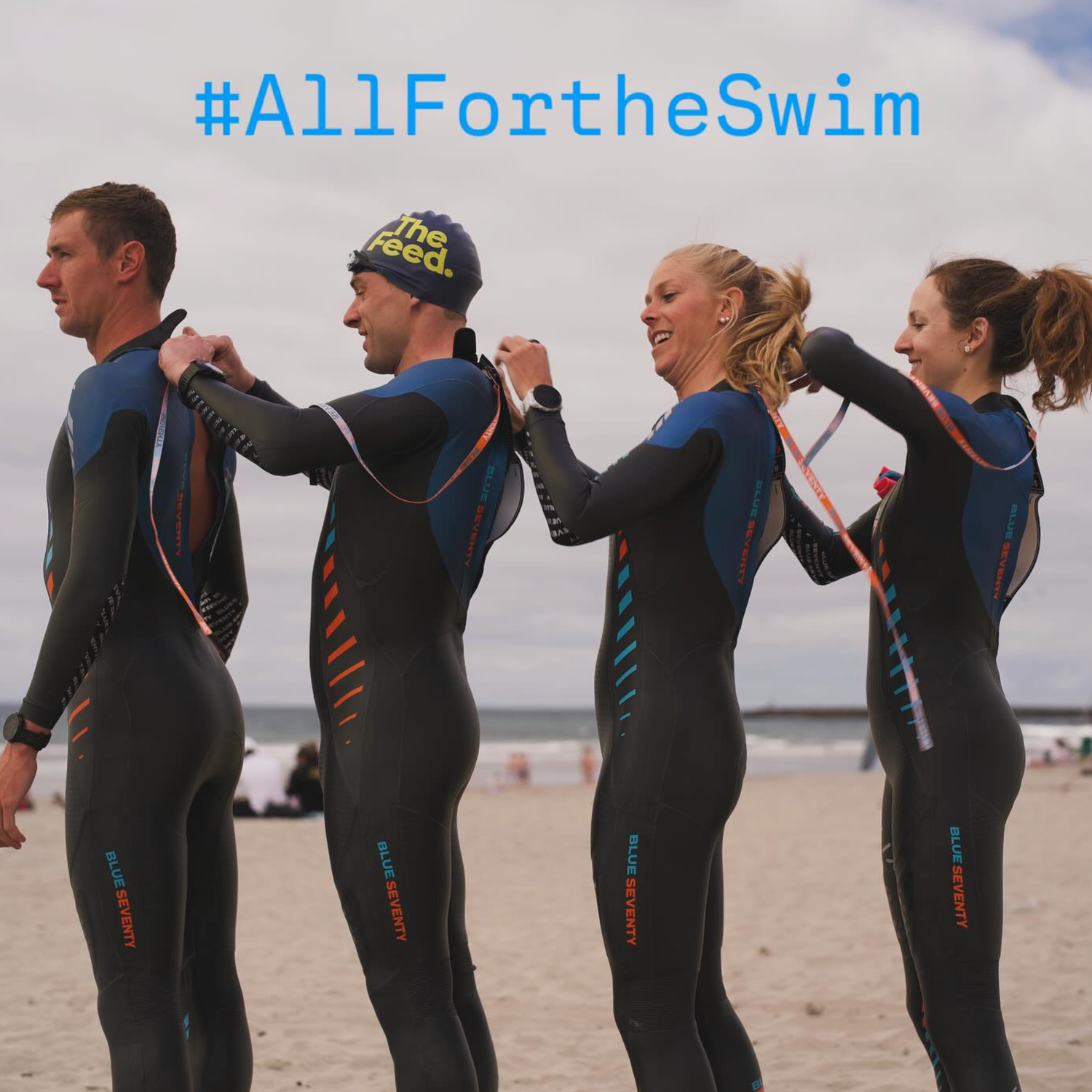
Before you decide a suit is too thick or too restrictive, check the fit. A wetsuit that is sitting low through the legs, hips, or torso will pull through the shoulders. Many swimmers read that as a problem with the model when the real issue is poor setup.
blueseventy’s fit guidance is clear: a wetsuit should feel snug on land and more comfortable once you are in the water. That principle matters in winter because cold water makes every donning mistake more obvious.
Three fit checks can change the whole session:
- Work the suit fully into the shoulders. If the material is sitting low, your upper body will pay for it.
- Clear slack from the torso. Excess material left in the lower body often steals range of motion from the top half of the suit.
- Check the neckline position. If the neck pulls backward, the suit may still be sitting too low through the body.
A correctly fitted swim-specific wetsuit can feel completely different from the same suit put on in a rush.
How triathletes should think about winter wetsuit choice
Triathletes need to think beyond warmth. A winter suit has to support body position, allow efficient sighting, and leave the shoulders ready for the rest of the race or training day.
Wetsuits help improve body position, and buoyancy equals speed in the water. Beginners often gain the most from that effect. But buoyancy only helps when it works with your stroke. If extra neoprene changes your timing or makes the catch feel disconnected, the benefit gets diluted.
For triathletes, the smartest order of operations looks like this:
- Start with water temperature.
- Consider how much shoulder freedom your stroke needs.
- Match the suit to the duration of the swim.
- Check durability if you train in the suit often.
- Dial in fit before making a final judgment.
blueseventy’s model guidance follows that logic. Frequent swimmers often do better in the Reaction for longer swims or the Fusion for shorter frequent sessions. The Helix is built for race-day performance, with very thin and flexible neoprene in the arms and shoulders, and blueseventy is candid that it is not the ideal choice for heavy training use because that delicate construction breaks down more quickly.
That trade-off matters. The right winter suit is the one that matches your actual swim week, not the one that wins a thickness debate.
A practical way to decide between 3/2 and 5/4
If you want a clean framework, use this one:
- Choose flexibility first if your shoulders tire easily, your technique depends on a long front end, or your swims are steady and continuous.
- Choose a thermal swim-specific suit if the water is below about 56 to 58°F and cold, rather than mechanics, is the main limiter.
- Recheck fit before changing categories if the shoulders feel blocked or the neckline pulls.
- Choose for the full session, not for the wind chill at the water’s edge.
The winter takeaway
For swimmers, 3/2 versus 5/4 is not a simple thicker-is-better decision. The better suit is the one that provides enough thermal protection while still letting you swim like a swimmer.
If more neoprene costs you reach, rotation, and catch quality, the trade-off may not be worth it. Many open-water swimmers and triathletes do better in a swim-specific winter suit that protects warmth without turning shoulder freedom into the price of admission.
Choose for stroke quality first, thermal need second, and label last. That is usually the clearest path to a better winter swim.
If you want help dialing in fit before your next cold-water session, take a look at blueseventy’s Fit Guide, Size Charts, or Take a Test Swim program.